How to Protect Suede Shoes: A Shoemaker’s Guide to Waterproofing
When you get a new pair of suede shoes, you may wonder, "Is there something I should do to protect them?" — but many end up wearing them without protection.
Many people know that waterproofing sprays are available, but many aren't sure if they're really necessary. Others don't know which product to use in the first place.
In this article, I'll define what "protecting" suede actually means. Then I'll walk you through what waterproof sprays can and can't do, along with the proper way to use one.
Protecting Suede Shoes Means Stopping Liquids from Soaking In
Suede is a type of leather whose flesh side is buffed to raise the fibers. Because the surface is napped, liquids soak into the fibers more easily than they do with smooth leather.
Water, coffee, and oil — when these liquids penetrate the fibers, they leave a stain behind once they dry.
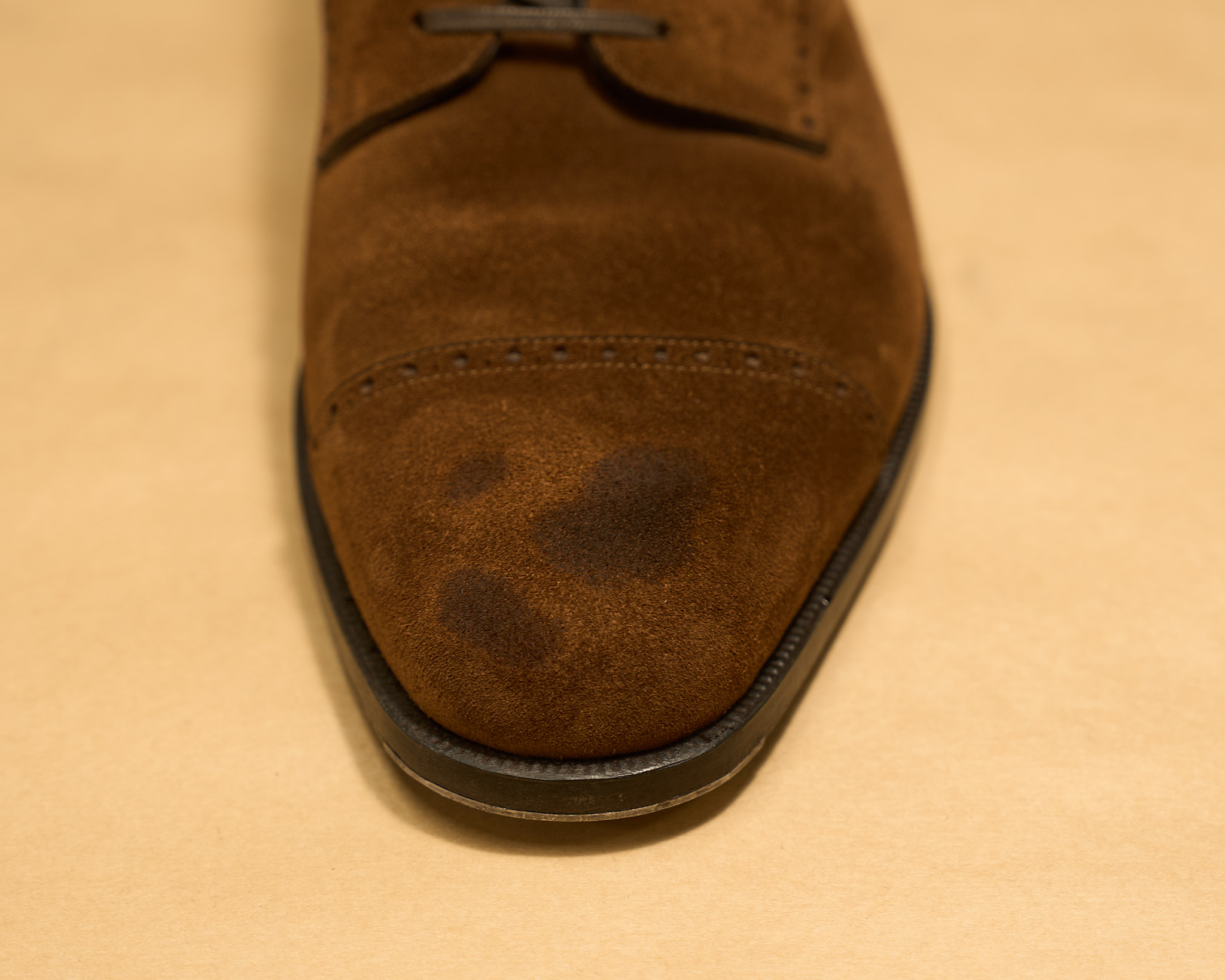
This is the most common form of damage in suede shoes.
To "protect" suede shoes is to stop liquid penetration. In other words, the shoes need to be waterproofed and water-repellent.
A waterproofing spray does this job. The water-repellent agent coats the suede fibers, forming a film that allows liquids to bead up.
Liquids and water-based stains are then repelled at the surface, before they can work their way deep into the fibers.
How to Protect Suede Shoes, Step by Step
The procedure itself is simple. I'll walk through the process with important points and care that make the work more effective.
Tools You'll Need
You'll need the two items below.
Both are tools you'll use often in everyday suede care. If you don't have them yet, this is a good time to add them to your suede care kit.
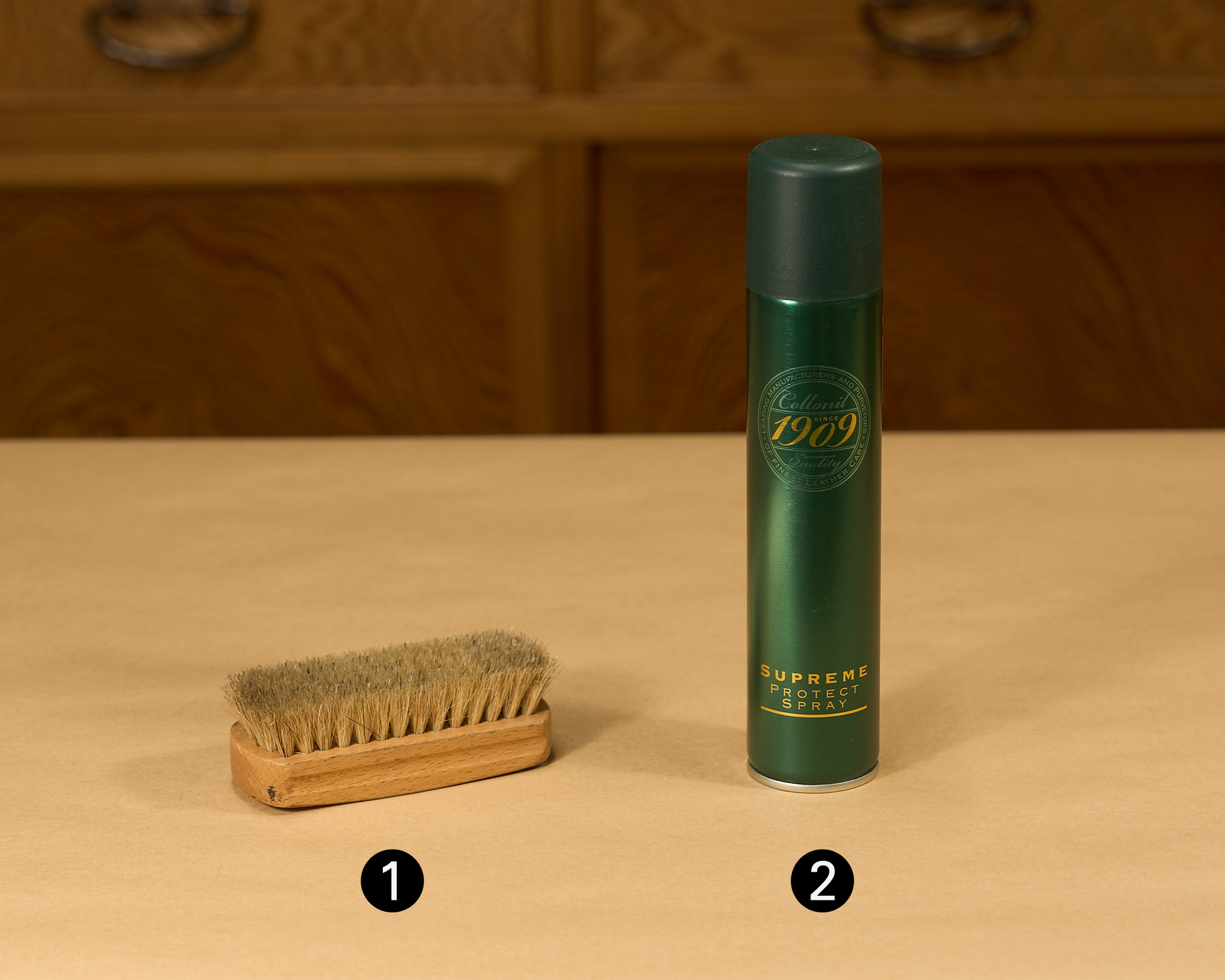
1. Pig Bristle Brush
You'll use this brush twice — once before spraying and after the spray dries.
Pig bristles have more stiffness than horsehair, which makes it well-suited for combing the suede nap into shape.
2. Suede Protector Spray
A waterproofing spray made specifically for suede.
Some general-purpose waterproofing sprays can change the color of suede or stiffen its fibers. Always choose a product clearly labeled as "suitable for suede."
The product I use most often is Collonil's 1909 Supreme Protect.
It offers strong waterproofing and water repellency. It also contains cedarwood oil and replenishes the leather, keeping the nap soft and preserving the fibers' condition.
Suede sprays come in two types: neutral (colorless) and tinted.
Neutral sprays don't add color, but they replenish the leather's oils. This prevents fading caused by dryness and restores the suede's original shade.
Use a neutral spray as your default. If you want to deepen the color further, then choose a tinted spray that matches your shoes.
Tinted sprays contain dye, so they will change the color of the suede once you apply them. Use them only when you understand that the color change is irreversible and unpredictable.
Step 1: Brush the Shoes
Before spraying, start with a thorough brushing.
If you spray over suede that still has dust or dirt on it, you'll also seal those dust particles. Once that happens, they're very hard to remove.
Brush the entire shoe carefully, removing all dust and dirt clinging to the surface of the nap.
Step 2: Spray and Let the Shoes Dry
Hold the spray can about 25–30 cm (10–12 inches) from the shoe and spray.
Spraying too close to the surface concentrates the product in one spot, leaving uneven patches. Keep your hand moving so the spray evenly covers the whole shoe.
After spraying, let the shoes dry in a well-ventilated place, away from direct sunlight or any heat source.
Drying usually takes 15 to 30 minutes. Follow the instructions on your specific product.
Step 3: Smooth the Nap
Once the shoes are completely dry, brush them again to restore the nap.
The fibers can feel a bit stiff right after spraying—a brush after drying restores the nap's original feel.
Aligning the nap in a single direction makes the color look uniform and gives the shoes a clean finish.
Frequently Asked Questions (FAQ)
Here are answers to common questions about protecting suede shoes.
Q. How often should I use the spray?
A. For shoes you wear often, refresh the coating every two weeks.
When I get a new pair of suede shoes, I always spray them before the first wear. I'd rather not get water stains on my new shoes.
I then re-coat every two weeks.
I also re-coat after the shoes get caught in the rain or after I wash them, since the water-repellent wears off in these kinds of situations.
When you do, make sure the shoes are completely dry first. If you spray over wet suede, the water already in the fibers mixes with the spray, preventing the coating from forming evenly.
Always wait for the shoes to dry fully before applying the spray.
Q. Can I wear waterproofed suede shoes in the rain?
A. As a rule, I don't recommend wearing suede shoes in the rain.
Suede is a napped material that easily absorbs water. The protection from a spray is not perfect — think of it as insurance for unexpected moments, not a license to wear suede in wet weather.
A light drizzle is usually fine. But even with a waterproofing spray applied, don't rely on it too much. It's wiser to leave your suede shoes at home on rainy days.
If you have to wear leather shoes in the rain, choose a material that hides scratches and stains better than suede — for example, pebbled leather.
A pair of chukka boots with a rubber sole is a reliable option to have for rainy days.
Q. Is there a way to protect suede shoes without using a spray?
A. Practically speaking, there isn't.
Tools like brushes and shoe trees keep your shoes in good condition, but they can't physically stop liquids from soaking in.
Household substitutes for a proper spray do exist, but I do not recommend them. They carry too much risk of damaging the leather.
A dedicated suede protector spray is the most certain way to protect your shoes.
A waterproofing spray is the only true way to protect your suede shoes from liquid damage. If you've never used one, try it before your next wear.
Brushing, both before and after spraying, is just as important. I have covered it in detail in How to Use a Suede Brush. Please read it together with this guide as part of your daily care routine.