How to Store Leather Shoes: Prevent Mold and Cracking
Shoes change subtly, even when they are not being worn.
I sometimes hear people say, "I found mold on my shoes after a few months of storage," or "I tried to wear them, and they had cracked." In most cases, proper storage could have prevented these damages.
In this article, I will cover two types of storage methods: long-term (weeks to months) and short-term (overnight to a few days)—along with the common problems and steps to prevent them.
Long-Term Storage: Preventing Mold and Cracking
Such as formal shoes for ceremonies and seasonal boots—some pairs are unworn for weeks or months. Even while shoes are stored, they deteriorate slowly.
The two main risks are mold and cracking.
Mold — It can grow in temperatures of 20–30°C and humidity above 70%. Dust and old cream left on the surface act as a food source for mold. Once the mold root penetrates into the leather, wiping the surface alone will not prevent it from returning.
Cracking — Leather needs oils to stay supple. When oils escape while storing, the fibers harden. If you wear the shoes in this condition, the stiff leather cannot withstand bending—forming deep cracks.
Before long-term storage, two things are essential: removing dirt and ensuring airflow to prevent mold, and replenishing oils to prevent cracking.
Before long-term storage, two things are essential: removing dirt and ensuring airflow to prevent mold, and replenishing oils to prevent cracking.
The following tools and steps address both.
Tools You Will Need
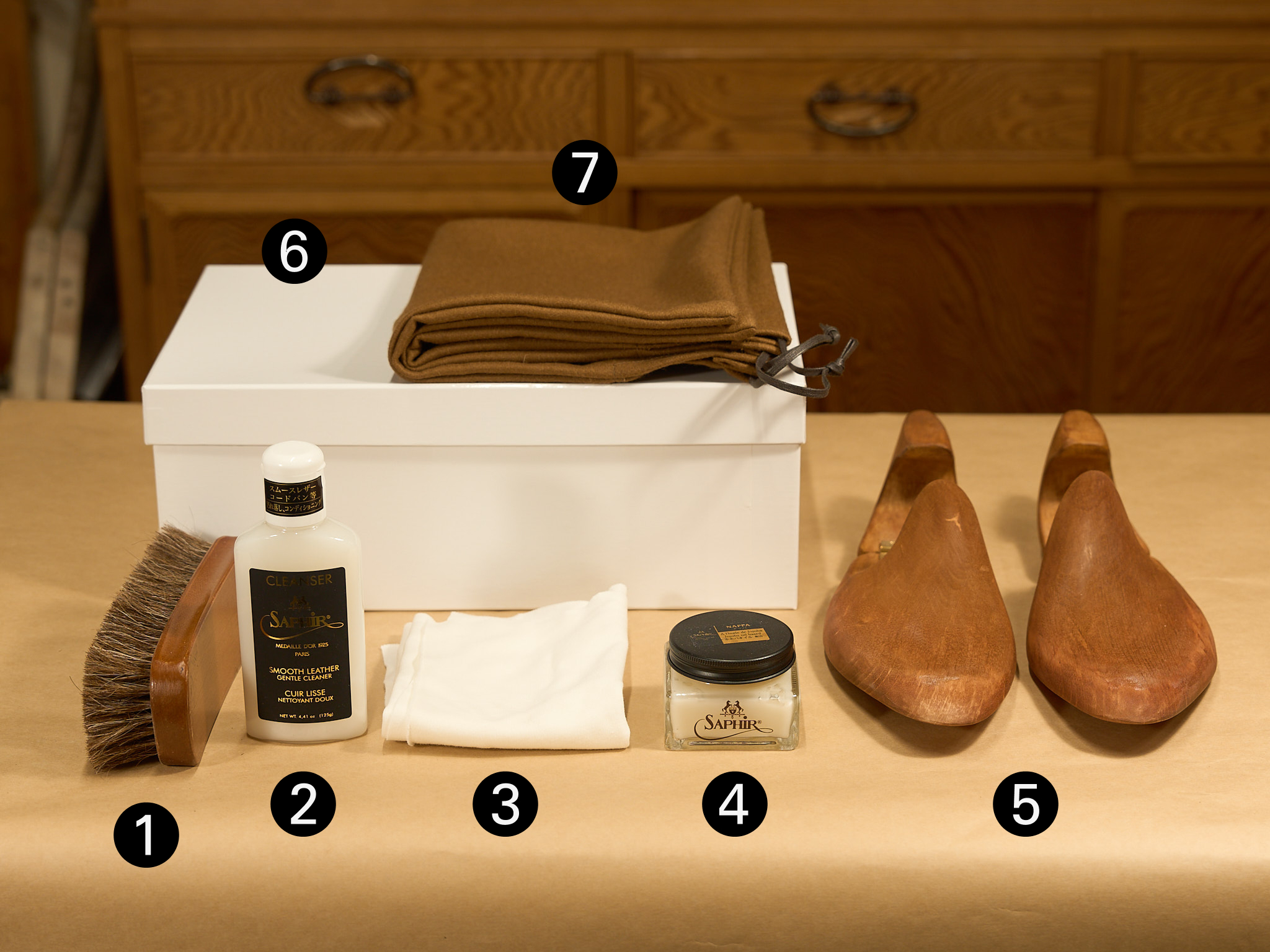
1. Horsehair Brush
Use a horsehair brush for removing dust and grit. Horsehair is fine and soft, so it cleans stitching and the edges of the shoe without scratching the leather.
2. Leather Cleaner
Use a leather cleaner for breaking down and removing old oils and oxidized cream from the surface. If you skip this step, the conditioning cream will not penetrate—leaving behind a breeding ground for mold.
3. Cloth
Use a cloth to apply cleaner, spread cream, and buff. An old cotton T-shirt works well. Choose a soft, 100% cotton fabric.
4. Conditioning Cream
Conditioning cream replenishes moisture and oils in the leather fibers, keeping them supple. During long-term storage, leather gradually loses moisture and oil. Conditioning cream with deep leather penetration is recommended.
5. Shoe Trees
Use shoe trees to maintain the shoe's shape and stretch out wear creases. Wooden ones—especially red cedar—also absorb moisture and reduce odor.
6. Storage Case
Use a storage case for blocking light and dust. The original shoe box is ideal for ventilation.
7. Shoe Bags or Non-Woven Fabric Bags (Optional)
Shoe bags are bags that protect your shoes. Use the shoe bags that came with your purchase, or non-woven fabric bags.
If you put your shoes in a box, you can keep the dust away. The shoe bags themselves do not protect shoes from mold risks.
However, they prevent the shoes from rubbing against each other inside the box. It is worth having them, if you can.
Now, let me walk you through each step.
Step 1: Brush Off Dust with a Horsehair Brush
Start by brushing the entire shoe with a horsehair brush to remove dust.
Focus on areas where dust collects—stitching, and especially the joint where the sole and the upper meet, which is where the mold tends to grow.
If you apply conditioning cream over dust, you seal it into the leather—creating a bed for mold.
The sole is also prone to mold. Do not forget to brush the sole.
Step 2: Clean the Surface with Leather Cleaner
Apply cleaner to a cloth and wipe away old cream and dirt from the surface.
One wipe will not cover the whole shoe. Switch to a clean section of the cloth, then reapply the cleaner and work thoroughly.
Creases collect extra dust. Apply pressure from inside the shoe to flatten the creases, then wipe carefully.
Removing every trace of dirt allows the cream in the next step to penetrate deep into the leather.
Step 3: Nourish the Leather with Cream
Take a small amount of cream on your finger or a cloth and apply it in a thin, even layer.
During long-term storage, moisture and oils gradually escape. The cream restores them deep into the fibers.
Creases lose moisture faster, and the fibers there are weaker. Work the cream along the direction of the creases.
After applying, use a clean section of the cloth to buff the entire surface firmly. Wipe off any excess cream.
Step 4: Insert Shoe Trees
Insert shoe trees.
They stretch out creases and return the shoe to its original shape.
If deep creases are left and untreated, the leather hardens in that shape. The next time you wear the shoes, cracks may form along those creases.
Shoe trees can maintain the leather in a smooth, crease-free condition.
Step 5: Place in a Storage Case
Place the shoes in a storage case. If you have shoe bags or non-woven fabric bags, put the shoes in them first.
If the shoes are pressing against each other for a long time, they will dent. These marks are difficult to remove. Make sure the shoes do not touch each other inside the storage case.
Place the storage case in your storage. And you are done.Place the shoes in a storage case. If you have shoe bags or non-woven fabric bags, put the shoes in those first.
Short-Term Storage: Preventing Odor and Loss of Shape
While long-term storage spans weeks or months, short-term storage refers to overnight or a few days. After wearing shoes for a day, the shoes are covered with dust and sweat. If you leave them untreated, they deteriorate.
The two main risks are odor and loss of shape.
Odor — Your feet produce roughly 200 ml of sweat per day. If you leave that moisture and warmth trapped inside, the bacteria can multiply—causing unpleasant smells.
Loss of shape — Leather softens when damp and sets its shape as it dries. If deep creases are left untreated, the leather hardens in a misshapen form, and those creases can become the starting point for future cracks.
Release the moisture, and reshape the leather while it is still soft. Make these two shoe care steps part of your daily routine.
Tools You Will Need
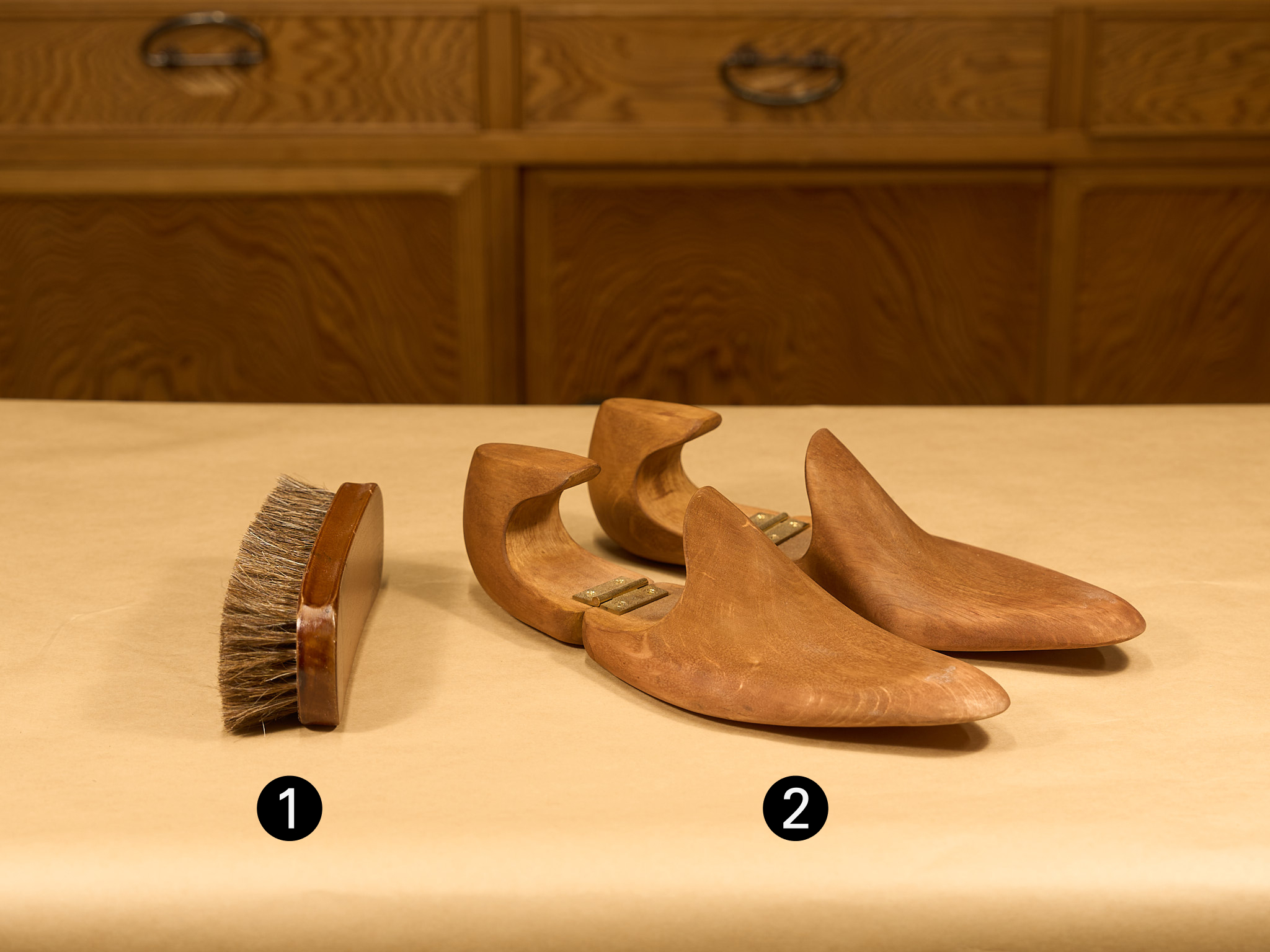
1. Horsehair Brush
Use a horsehair brush for removing dust and grit. Horsehair is fine and soft, so it can clean the stitching and the edges of the shoe without scratching the leather.
2. Shoe Trees
Use shoe trees to maintain the shoe's shape and stretch out wear creases. Wooden ones—especially red cedar—also absorb moisture and reduce odor.
Now, let me walk you through each step.
Step 1: Brush Off Dust with a Horsehair Brush
When you get home and take off your shoes, start with a brush.
A day outdoors leaves your shoes covered in dust. Brush the dust off.
Give extra attention to the edges and stitching, where dust tends to build up.
Step 2: Insert Shoe Trees
Next, insert shoe trees.
Shoes are damp with sweat right after wearing. As the leather dries, it sets its shape.
By stretching out the creases with shoe trees, you can maintain the shoe in its proper form as it dries.
Step 3: Place on a Shoe Rack
After brushing and inserting shoe trees, place the shoes on a rack. That is all you need to do to store your shoes every day.
However, on days when you walk a lot and your feet sweat heavily, or perhaps during humid seasons when drying takes time, leave the shoes in the entryway for a few hours to air out before putting them on the rack.
Adjust the time based on how much you sweat and the climate where you live.
Going Deeper: Tools and Environment for Better Storage
In the sections above, I will deep-dive into several topics related to better storage.
- How to choose shoe trees
- How to choose a storage case
- Ideal environment for long-term storage
These can make a real difference in the quality of your storage—both in the long and short term.
How to Choose Shoe Trees
Shoe trees do more than maintain the shape. They play a key role in keeping the leather in good condition during storage.
Search online, and you will find many materials and designs. It can be overwhelming.
I recommend unfinished wood with a spring-loaded design, like this one.
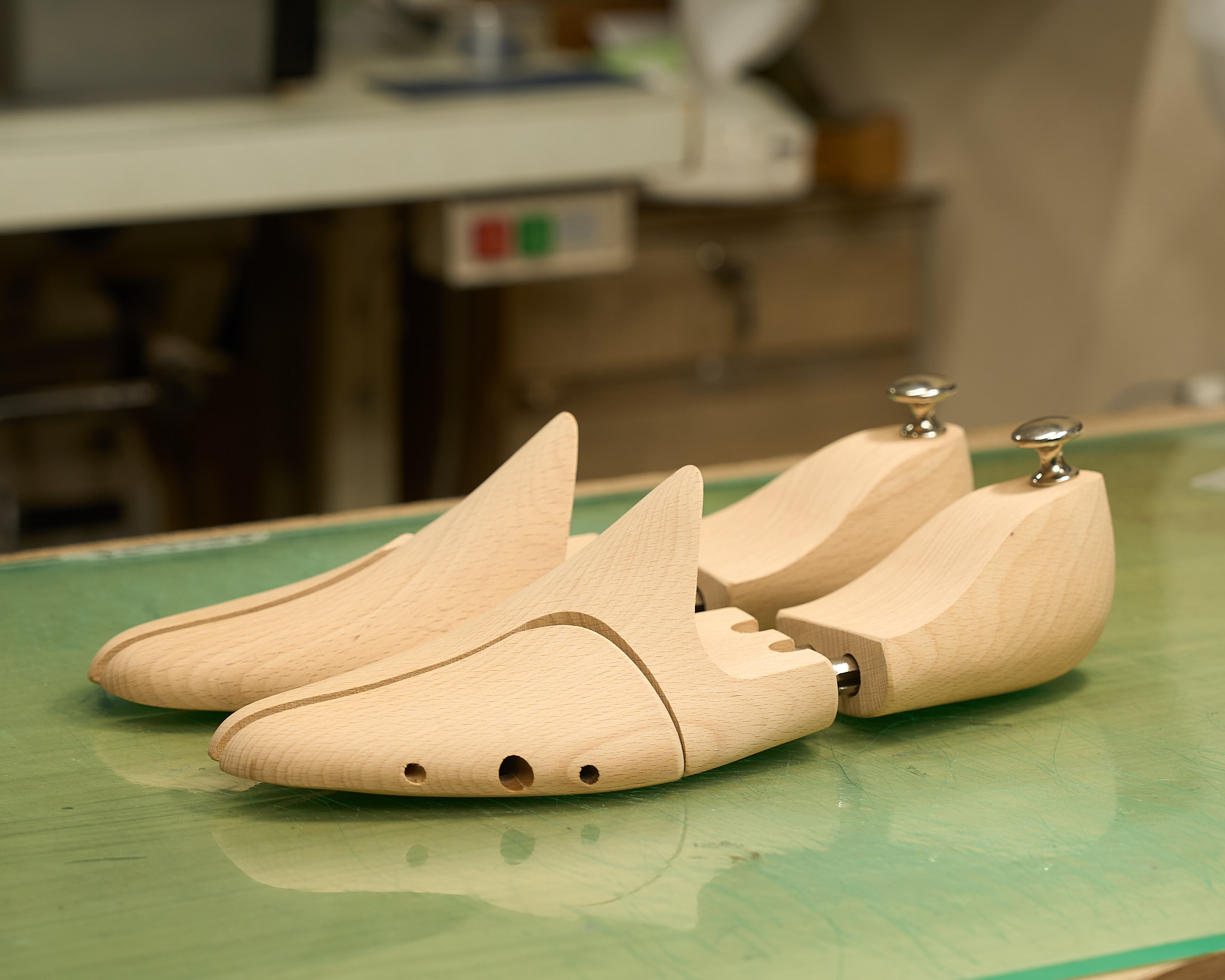
Material: Unfinished Wood
Unfinished wooden shoe trees absorb residual moisture from inside the shoe and naturally reduce odor.
Plastic shoe trees are cheap and lightweight, but they do not absorb moisture. Used in damp shoes, they trap humidity inside.
Type: Spring-Loaded
A spring-loaded type applies even pressure from front to back.
This tension corrects the sole curl and stretches out creases.
The spring also gives some flexibility, so it fits a range of shoe shapes.
Commercial shoe trees come in multiple sizes. Choose one that matches your shoes.
Some shoemakers offer their own shoe trees, designed to fit their lasts precisely. If available, those are the best options.
How to Choose a Storage Case
Here is how to choose a storage case for long-term storage.
The original shoe box is best. If you no longer have it, choose a cardboard box with good airflow, like this one.
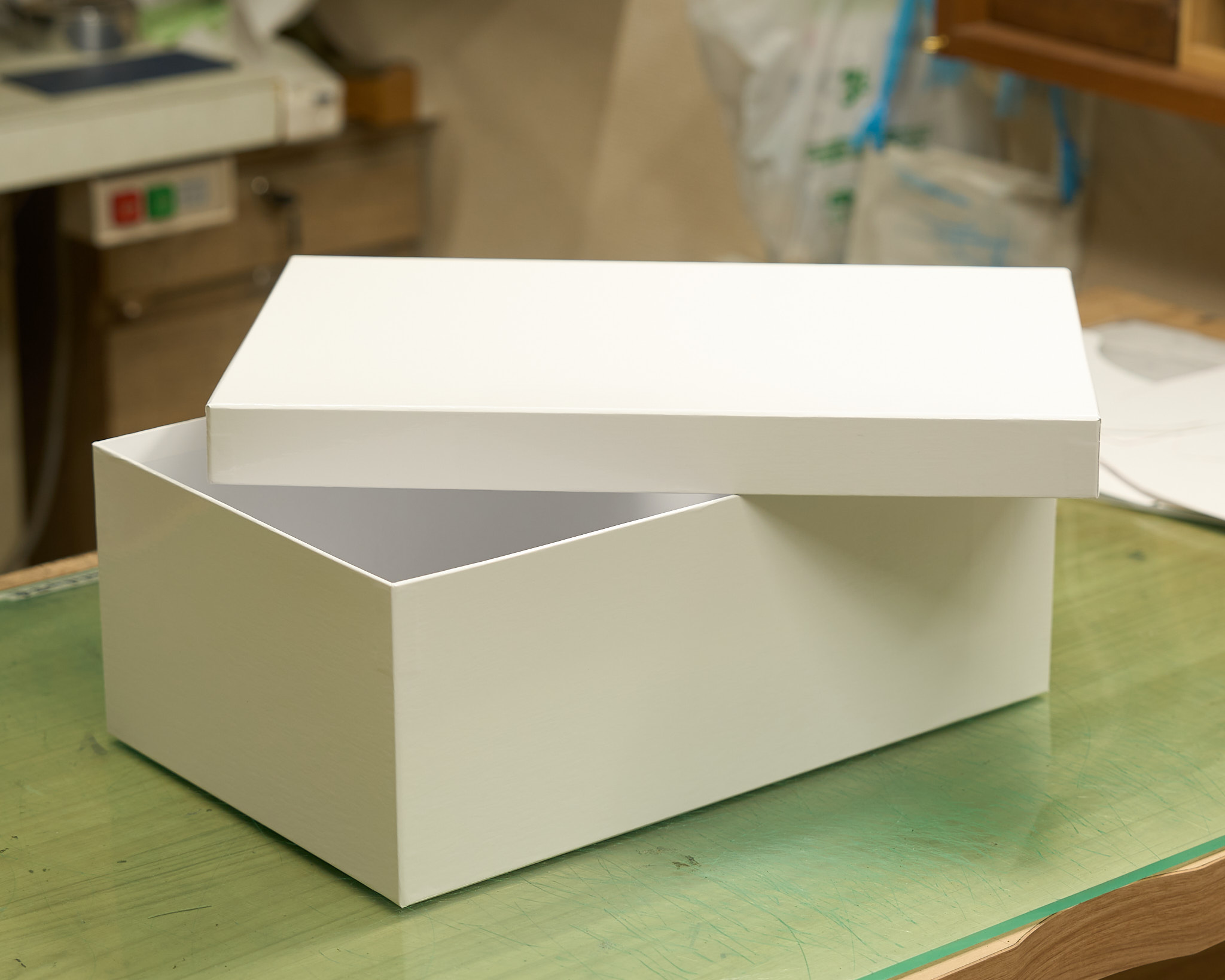
Cardboard absorbs and releases moisture depending on the surrounding humidity, preventing moisture from building up inside the box.
It also lets air pass through while shielding the shoes from dust—a food source for mold.
Clear plastic cases are convenient, but they seal more tightly than cardboard.
When air stagnates, moisture has nowhere to go, increasing the risk of mold.
If you use a plastic case, choose one with ventilation holes—or drill some yourself.
Ideal Environment for Long-Term Storage
For successful long-term storage, choose the right spot in your home. Keep these three points in mind.
Keep Them Out of Sunlight
Store leather shoes in a dark place with no direct sunlight.
UV light fades the color and oxidizes the oils in the leather, accelerating deterioration.
Avoid window areas. A closet or a shelf that blocks light works well.
Ensure Good Airflow
Good airflow is essential for preventing mold.
In still air, even slight moisture can trigger mold growth.
If you store shoes in a closet or shoe cabinet, opening the door regularly to let air circulate helps.
Maintain Moderate Temperature and Humidity
Finally, choose a place with moderate temperature and humidity.
The ideal range is 18–22°C and 40–60% humidity. You do not need museum-level climate control at home.
Treat these as guidelines. Simply avoiding extremely hot areas and damp spots near water will go a long way.
Frequently Asked Questions
Q. What is the "3-shoe rule"?
The context of the "3-shoe rule" is making leather shoes last; it means that you should rotate three pairs of shoes.
A shoe worn for a full day needs roughly two days to dry and recover. This is the reason why rotating three pairs is a great idea.
Wearing the same pair every day traps moisture, breeds bacteria, and speeds up leather deterioration.
By rotating three pairs, each one gets enough time to recover—and all three pairs will last longer.
If you wear leather shoes every day, try adopting this routine.
Q. Can I use Vaseline to condition shoes before long-term storage?
I do not recommend using Vaseline.
Vaseline is a petroleum-based mineral oil with large molecules. It coats the surface of the leather in a thick layer.
This blocks the leather from breathing, which means it traps moisture inside—inviting mold—and attracting dust.
Use a proper shoe cream for care.
Q. How do I remove mold that appeared during storage?
Use a dedicated mold-removal cleaner or disinfectant spray.
When mold grows, it takes root inside the leather. Simply wiping or brushing the surface is unlikely to prevent it from coming back.
After cleaning, let the shoes dry thoroughly and reconsider the ventilation of your storage area.
Storing leather shoes properly is a way to care for them before you wear them next time.
The steps in this article take only a few minutes once you get used to the routine. That small effort adds up—five or ten years from now, you may be surprised at how well your shoes have held up.
I hope this guide helps you keep your favorite pair in good condition for years to come.