How to Remove Stains from Suede Shoes: Water Stains and Oil Stains, Step by Step
When stains appear on suede shoes, many people are uncertain what to do.
If you search online, you will find methods that use vinegar or baking soda. These can actually damage the leather.
The napped surface of suede is delicate. A wrong approach can ruin its character.
In this article, I will show you the tools and steps to remove stains safely, without harming the suede.
Two Types of Stains on Suede Shoes
Stains on suede fall into two types: water stains and oil stains.
Each stain forms differently. So each stain needs a different approach.
The first step is to identify which type of stain you have.
1. Water Stains from Rain, Mud, or Spills
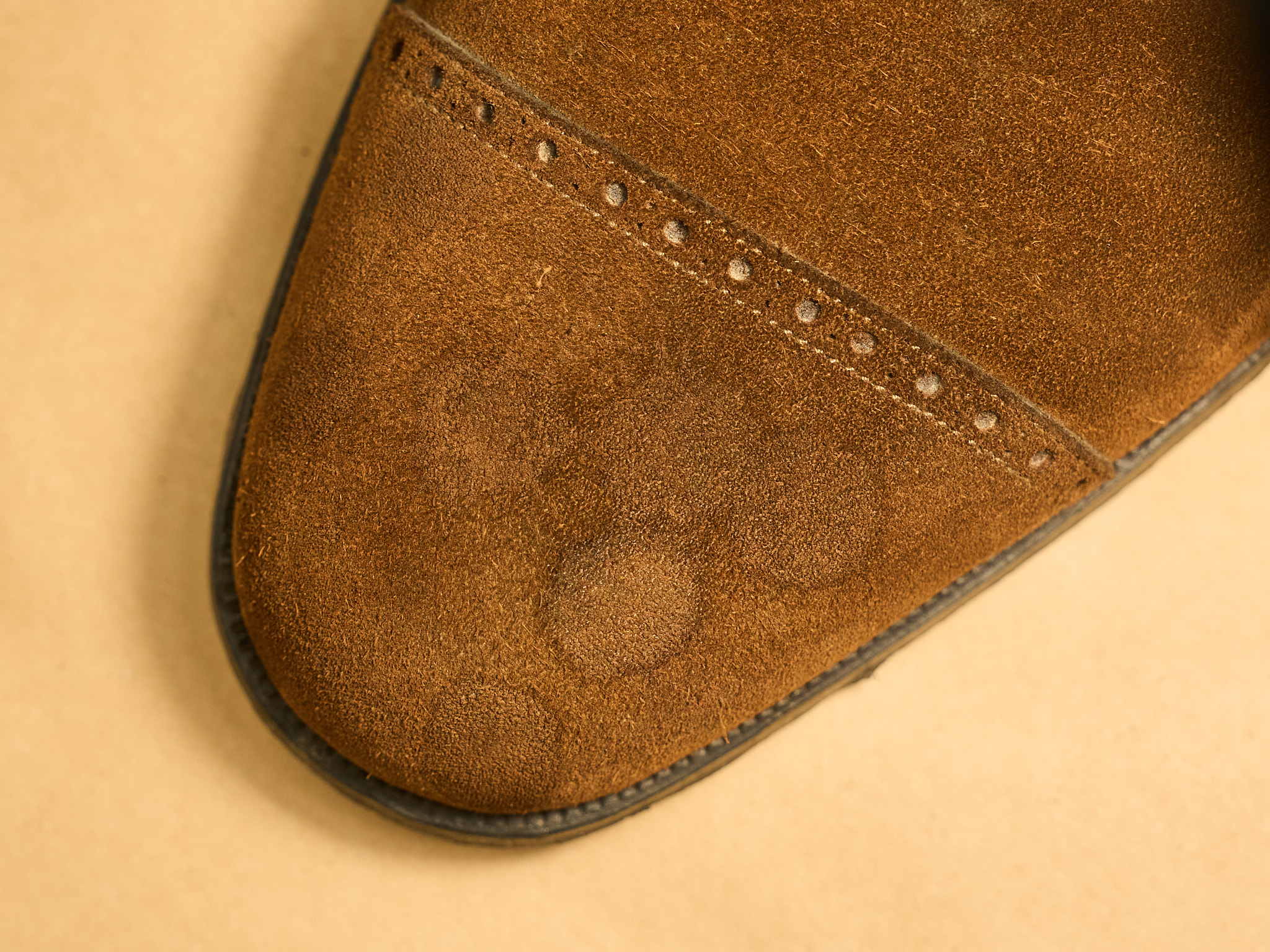
Water stains form after rain, muddy water, or drinks that have been spilled and then dried on the suede.
The surface of suede is leather with a fine raised nap.
When water soaks in with dissolved dirt, the suede dye moves deeper into the fibers.
As the shoe dries, those materials settle unevenly. Dark and light patches appear.
Compared with oil stains, water spots look lighter. They often form a ring shape.
2. Oil Stains from Grease and Oil
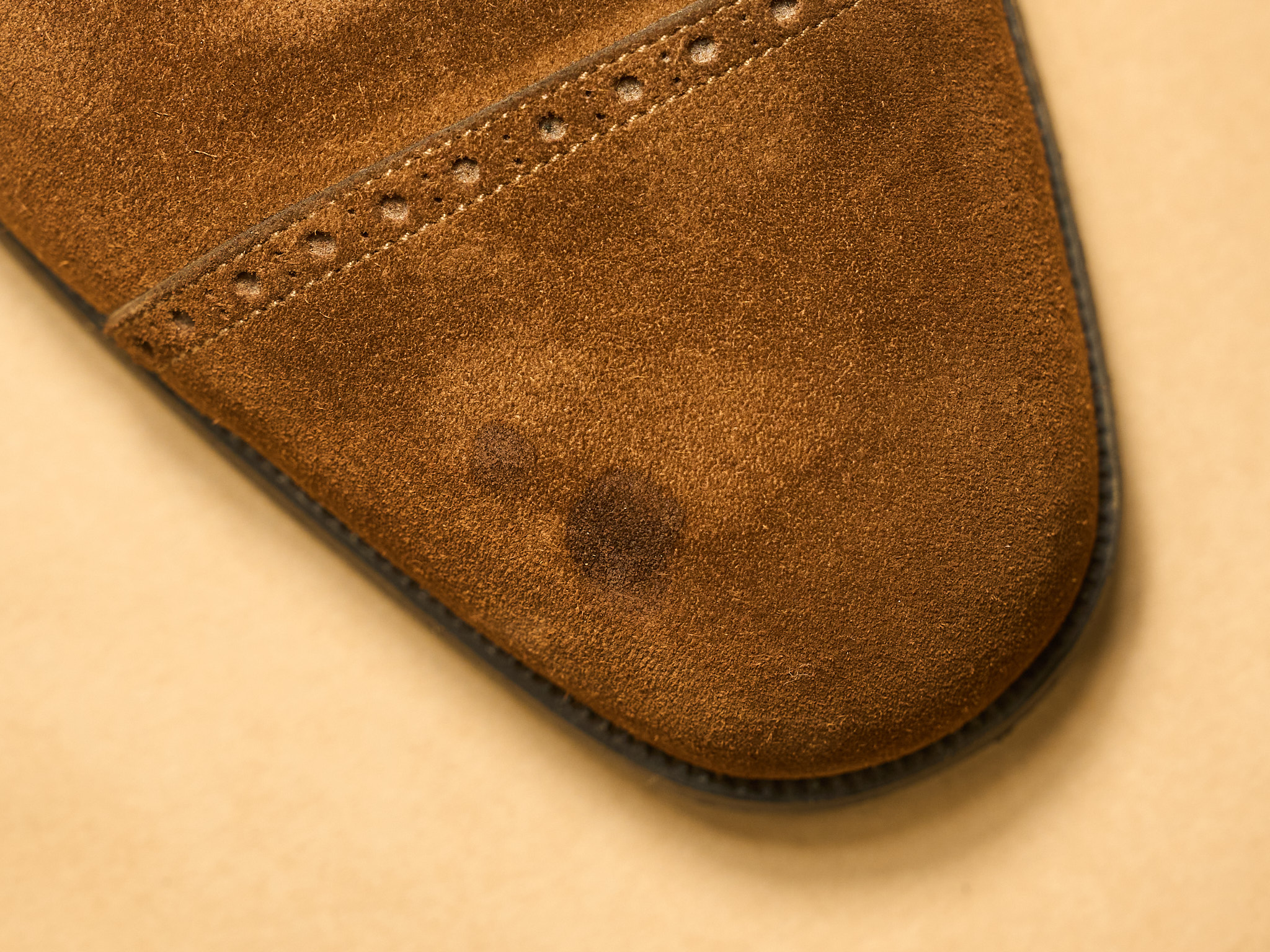
Oil stains form when cooking grease spills near your shoes, or when bike or motor oil touches the suede without you realizing it.
Unlike water, oil does not evaporate. The oil left in the fibers changes how light reflects. The spot looks different in color from the area around it.
Compared with water stains, the edges of oil spots are softer. The color often looks darker.
Over time, the oil hardens and becomes harder to remove. Act early.
Below, I will explain how to remove each type of stain.
How to Remove Water Stains from Suede Shoes
To remove water stains, wet the whole shoe evenly, then let it dry.
If you only partially wet the shoe, a new uneven patch will form in the border between the wet and dry areas.
So wash the entire shoe, not just the stained area. As you evenly spread the water, you also lift dirt trapped in the fibers.
When the shoe dries, the surface will look even again.
Tools You'll Need
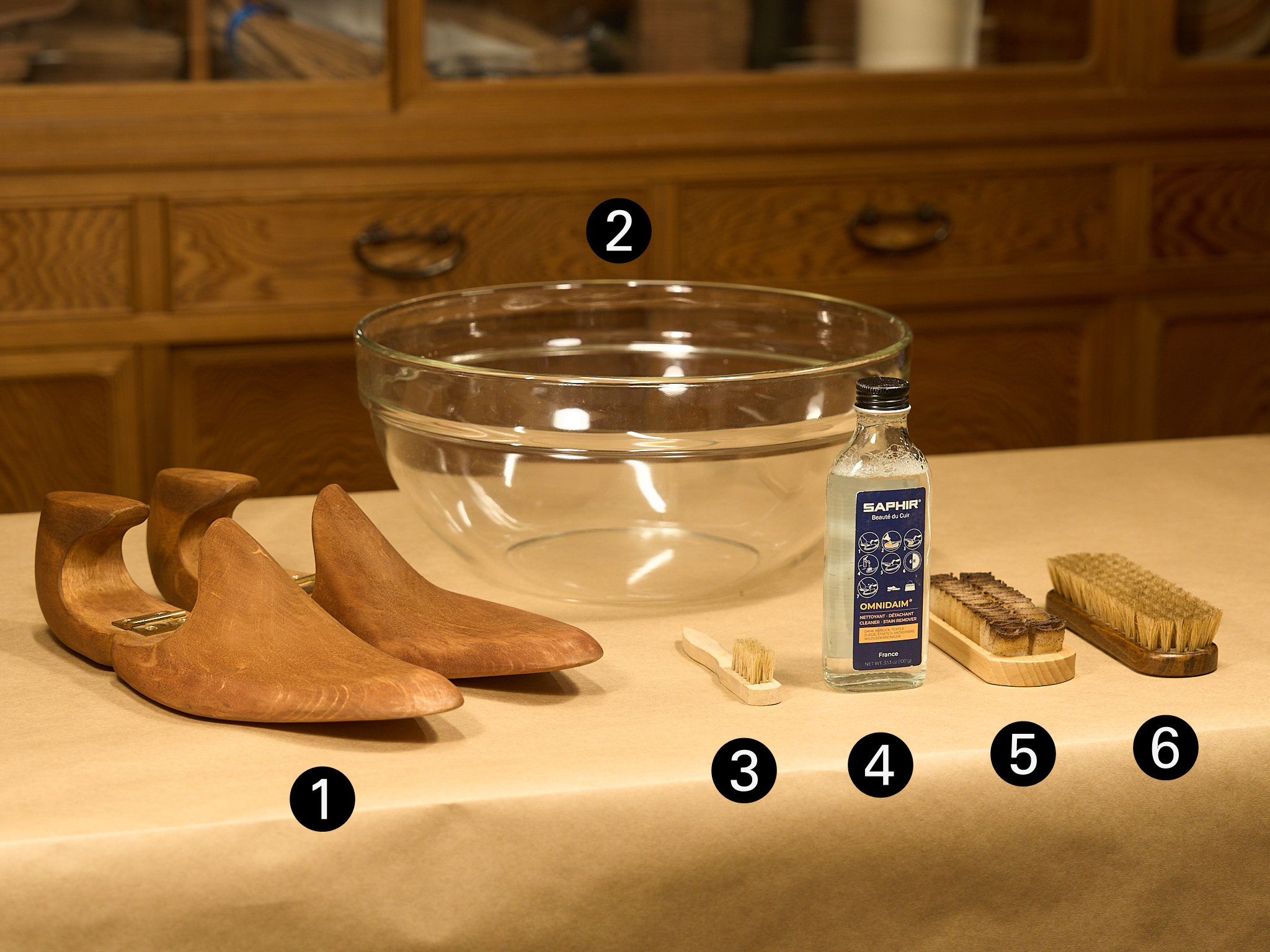
1. Shoe Trees
Use shoe trees to hold the shoe's shape while it dries.
Wet suede becomes soft and loses its form easily. Keep shoe trees inside the shoes so they hold their proper shape as you clean them.
I recommend wooden shoe trees. They absorb moisture and will help with odor.
2. Bowl
A bowl to hold water.
You will not soak the whole shoe, so it does not need to be deep.
3. Handled Brush
Use this to wet the whole shoe.
Choose a brush with enough stiffness to reach into the nap.
Too much stiffness will damage the fibers. Pick one that is neither too hard nor too soft.
4. Suede Shampoo
A shampoo made for washing the whole shoe.
Suede reacts poorly to the surfactants in ordinary detergents. Color can fade. The leather can harden.
A dedicated shampoo is specifically made for suede.
In this article, I am using Saphir Omni Lotion.
5. Crepe Brush
Use this after the shoe has dried to raise the flattened nap.
A crepe brush is made for suede. The "bristles" are made out of rubber.
This can be used not only after washing, but in everyday care. If you do not have one yet, this is a good time to get one.
6. Pig Bristle Brush
Use this for the final finish.
Pig bristles are stiffer than horsehair. It is well suited to aligning the suede nap in one direction.
Like the crepe brush, it is useful for daily care as well.
I will explain the traits of each brush type in How to Use a Suede Brush: A Shoemaker's Guide to 5 Tools.
Step 1: Remove the Laces and Insert Shoe Trees
First, remove the laces and insert shoe trees.
If the shoe loses its shape while wet, that distortion will remain after it dries. Make sure to work with the shoe trees in place.
Step 2: Wet the Entire Shoe
Fill the bowl with water. Use the handled brush to wet the whole shoe.
Try not to leave dry patches. Wet every part of the shoe evenly.
If the suede repels water, work the brush lightly until the shoe surface absorbs the moisture evenly.
Do not wet the inside of the shoe. It can change how the shoe fits.
Step 3: Wash with Suede Shampoo
Put a modest amount of suede shampoo on the brush. Gently brush the whole shoe. Do not press hard.
If you scrub only the stained area with force, you can damage the fibers in that spot alone.
Wash the whole shoe with even pressure.
Step 4: Rinse Off the Shampoo
Rinse the shampoo off with water. Work carefully until no foam remains.
Again, keep water out of the inside of the shoe.
Step 5: Let the Shoes Dry
Let the shoes dry naturally in a well-ventilated, shaded spot.
Direct sun or heaters will dry the leather too fast. That can harden the leather and cause uneven color.
Full drying takes about two to three days, depending on the thickness of the leather and the room conditions.
Step 6: Raise the Nap with a Crepe Brush
Touch the shoe. Confirm that no dampness remains. Then brush the whole shoe with the crepe brush.
After washing, the nap will lie flat.
Raise it with the crepe brush, and the warm texture of the suede will return.
Step 7: Smooth the Nap with a Pig Bristle Brush
Finally, brush the whole shoe with the pig bristle brush to align the nap.
Move the brush in one direction — from toe to heel, or from heel to toe — until the nap is even.
When the nap is aligned, the suede's natural texture and color will look uniform again.
How to Remove Oil Stains from Suede Shoes
To remove oil stains, draw the oil out of the fibers with cornstarch.
Cornstarch is a fine food starch. It absorbs oil. If you use it this way, it lifts oil from suede without harming the fibers.
Absorption takes time. Plan for two to three days of cleaning.
Tools You'll Need
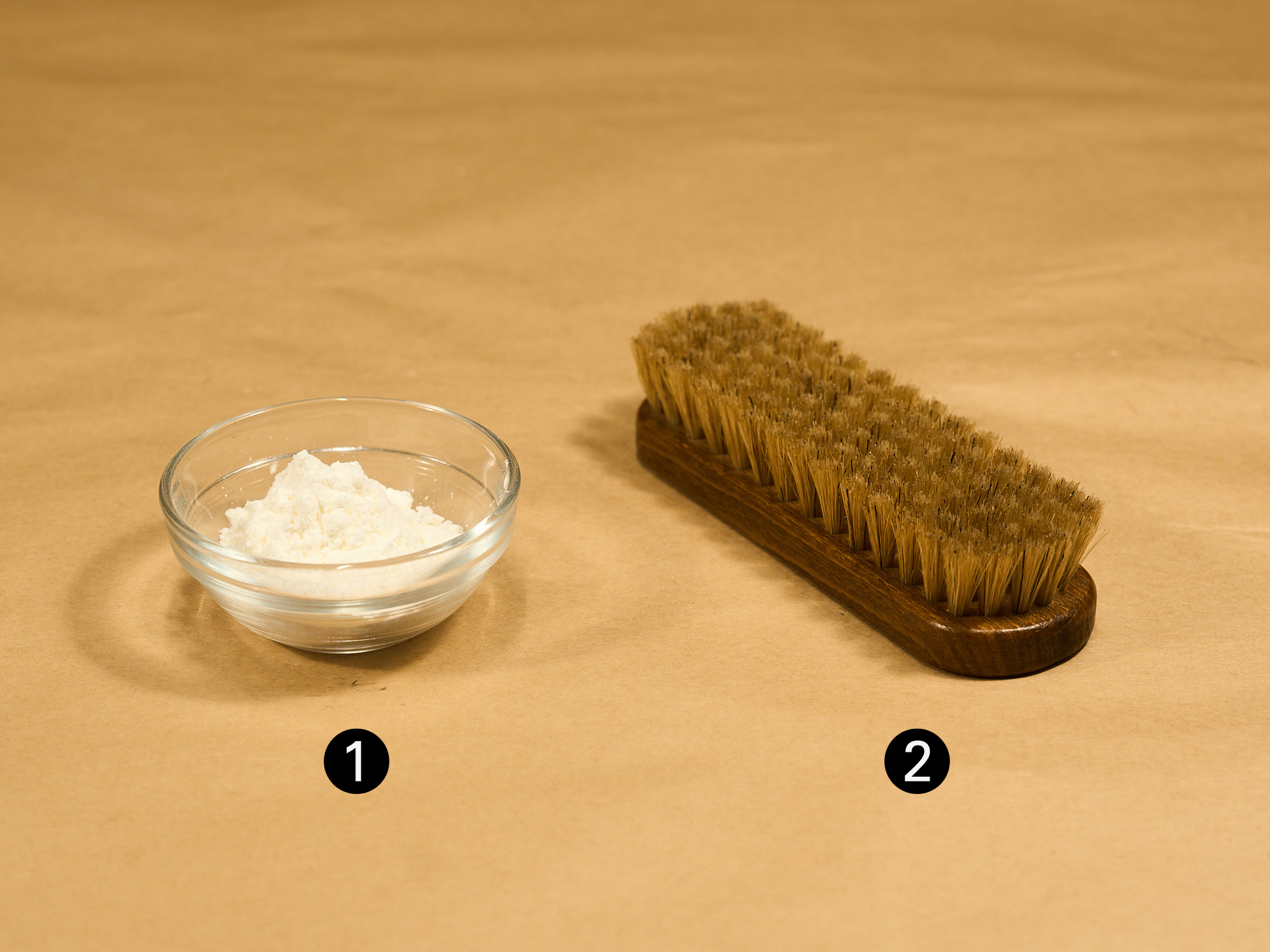
1. Cornstarch
Use ordinary cornstarch from the grocery store.
The finer the powder, the better. It needs to settle into the gaps between fibers to absorb the oil.
2. Pig Bristle Brush
Use this to brush the cornstarch away.
A pig bristle brush can clear the powder gently, without pushing it deeper into the fibers.
Step 1: Cover the Stain with Cornstarch
Place cornstarch on top of the stain.
For the powder to absorb oil, you will need to apply a lot of cornstarch so it will touch the fiber surface.
A small amount of cornstarch is ineffective. Cover the spot until the stain is fully hidden.
Leave it for a few hours. Overnight is even better.
The cornstarch will slowly draw the oil out of the fibers.
Step 2: Brush the Powder Away
After waiting for enough time, brush the cornstarch away gently with the pig bristle brush. Check the stain.
Too much force can push cornstarch into the suede fibers. Brush lightly across the surface.
Step 3: Repeat
If the stain is not fully gone after one treatment, repeat Steps 1 and 2.
Light stains often clear in two or three rounds.
Dark stains, or ones left for a long time, may need three or four rounds. Thin the spot gradually.
If you see no improvement after many rounds, the oil has likely set deep in the fibers. Home care may not be the solution.
In that case, talk to a repair shop that handles suede.
Be Careful with Household Products (Vinegar, Baking Soda, Dish Soap)
If you search online for how to remove stains from suede, you will find many methods that use vinegar, baking soda, or dish soap.
They seem easy. But they can harm the leather and make things worse.
Here are the risks of the three household products I see most often.
Can Vinegar Remove Stains from Suede?
It can work in some cases. But it can cause other problems. I do not recommend it.
Vinegar is a mild acid. It reacts chemically with alkaline substances.
Depending on the dirt, the stain may lighten.
But suede is tanned with tannins or chrome. Repeated acid on the leather can damage the fiber structure itself.
Vinegar can also leave a new spot of its own. And its smell can soak into the leather and stay.
Is Baking Soda Safe on Suede?
It can harm the texture of suede. I do not recommend it.
Baking soda acts as a fine abrasive.
Rub it into the napped surface, and the fibers can wear down, or the nap can tangle. The original character of the suede is lost.
Baking soda is also alkaline. It can change the color of the leather.
You set out to remove a stain, and end up making the shoe look worse.
Is Dish Soap Safe on Suede?
It can harden the leather and fade the color. I do not recommend it.
Dish soap contains strong surfactants made to break down grease.
That same power works on oil stains on suede.
But it also strips the oils the leather needs. The fibers can harden. The color can fade.
For oil stains on suede, cornstarch is the safer choice.
How you treat a stain on suede depends on whether it is a water stain or an oil stain.
For water stains, wash the whole shoe so that no uneven patches remain after drying. For oil stains, use cornstarch to draw the oil out.
Treat each spot the right way, and the stain clears without harming the suede. The shoe will return to a clean state.
I hope this article helps you keep your pair looking good for years to come.
For everyday care and protection against future stains, see these articles as well.