How to Remove and Prevent Mold on Leather Shoes: The Right Steps That Won’t Damage the Leather
Mold on leather is a common problem — many pairs that have been stored away for a long time.
When you find mold, you may worry that the shoes may be irreparable. But in most cases, you will be able to remove it with the right steps.
If you do it your own way, you may be able to remove the mold, but you may damage the leather in the process.
In this article, I will show you how to assess the condition of the mold. Also, I will introduce the steps to remove the mold that won't damage the leather, and how to prevent it from coming back.
Before You Start: Check the State of the Mold
The removal steps are the same for every type of mold. But each type gives you a different idea of how to clean the shoes.
Some types of mold are hard to remove and can't be returned to their original condition. So first, take a look at your shoes.
You can tell the type of mold by its color.
White Mold: It Comes Off Almost Completely
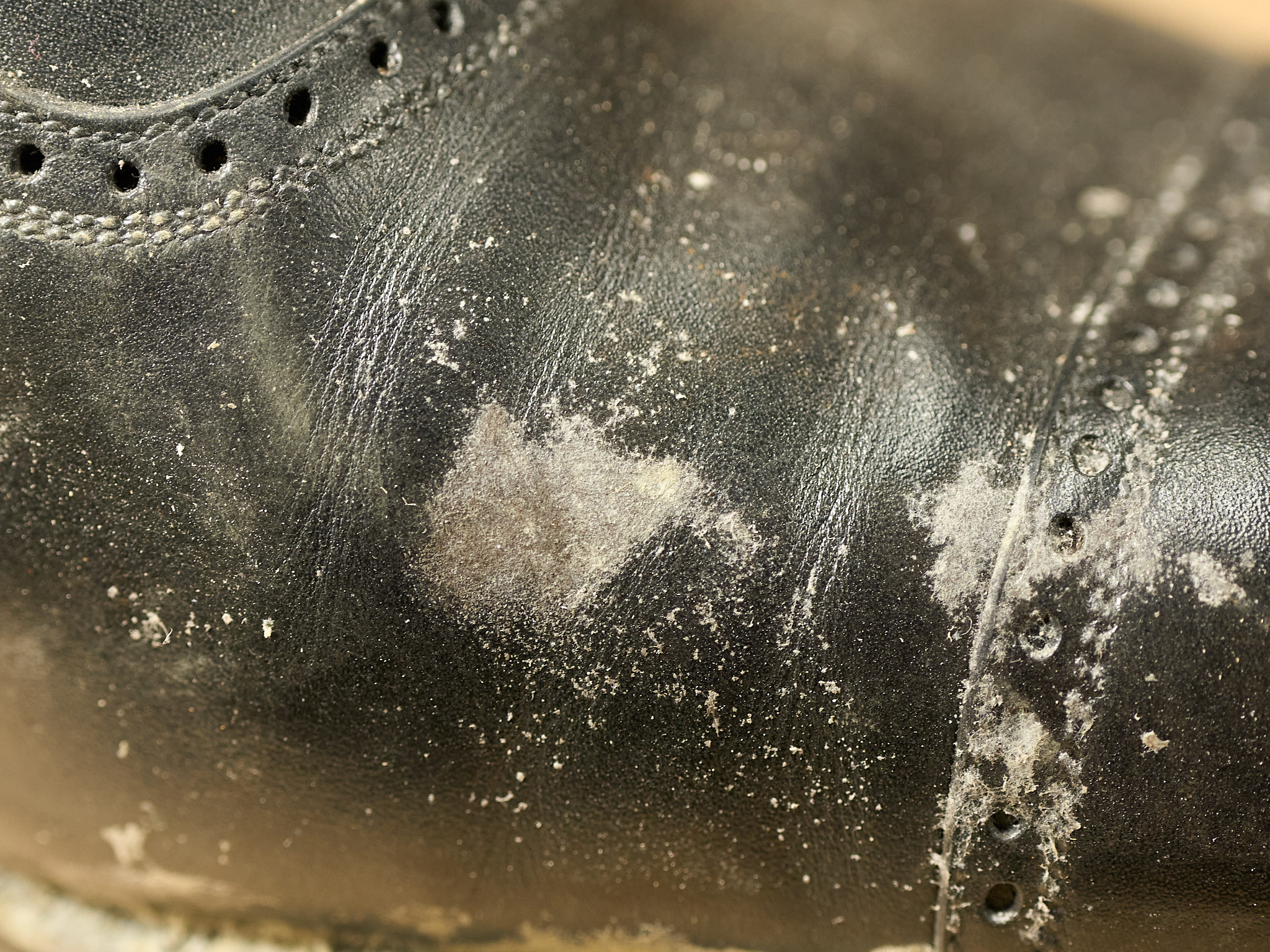
It looks like white powder sitting on the surface. The roots of the mold — the hyphae — stay in the shallow layer of the leather fibers. In most cases, it comes off without leaving residue.
Green Mold: It Cleans Up Well, but Watch for Regrowth
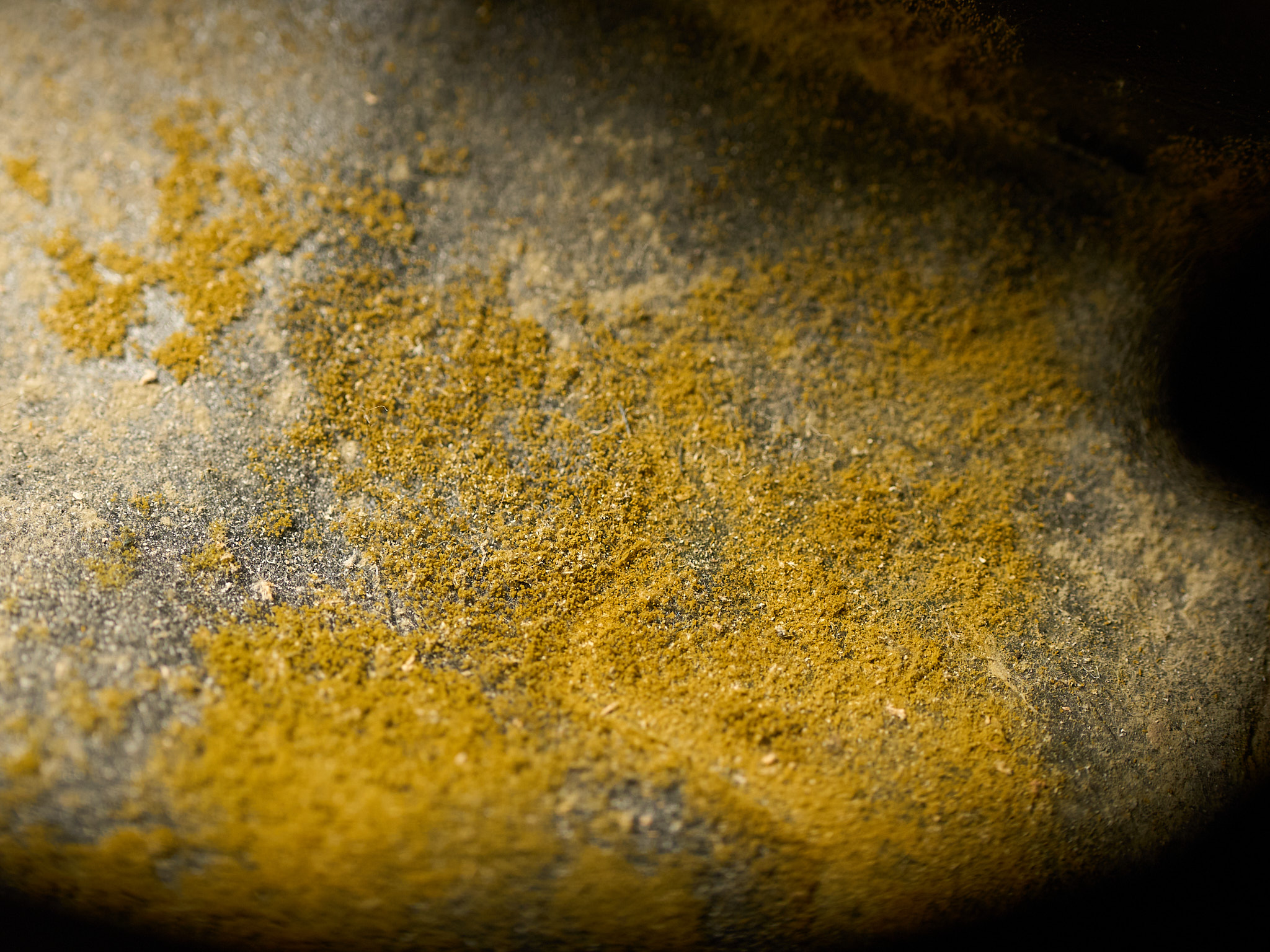
The roots have started to work into the leather fibers. It may leave a slight mark, but in most cases the shoes can be cleaned.
If the roots remain, the mold will return. Disinfect more carefully than you would for white mold.
Black Mold: A Stain Will Likely Remain
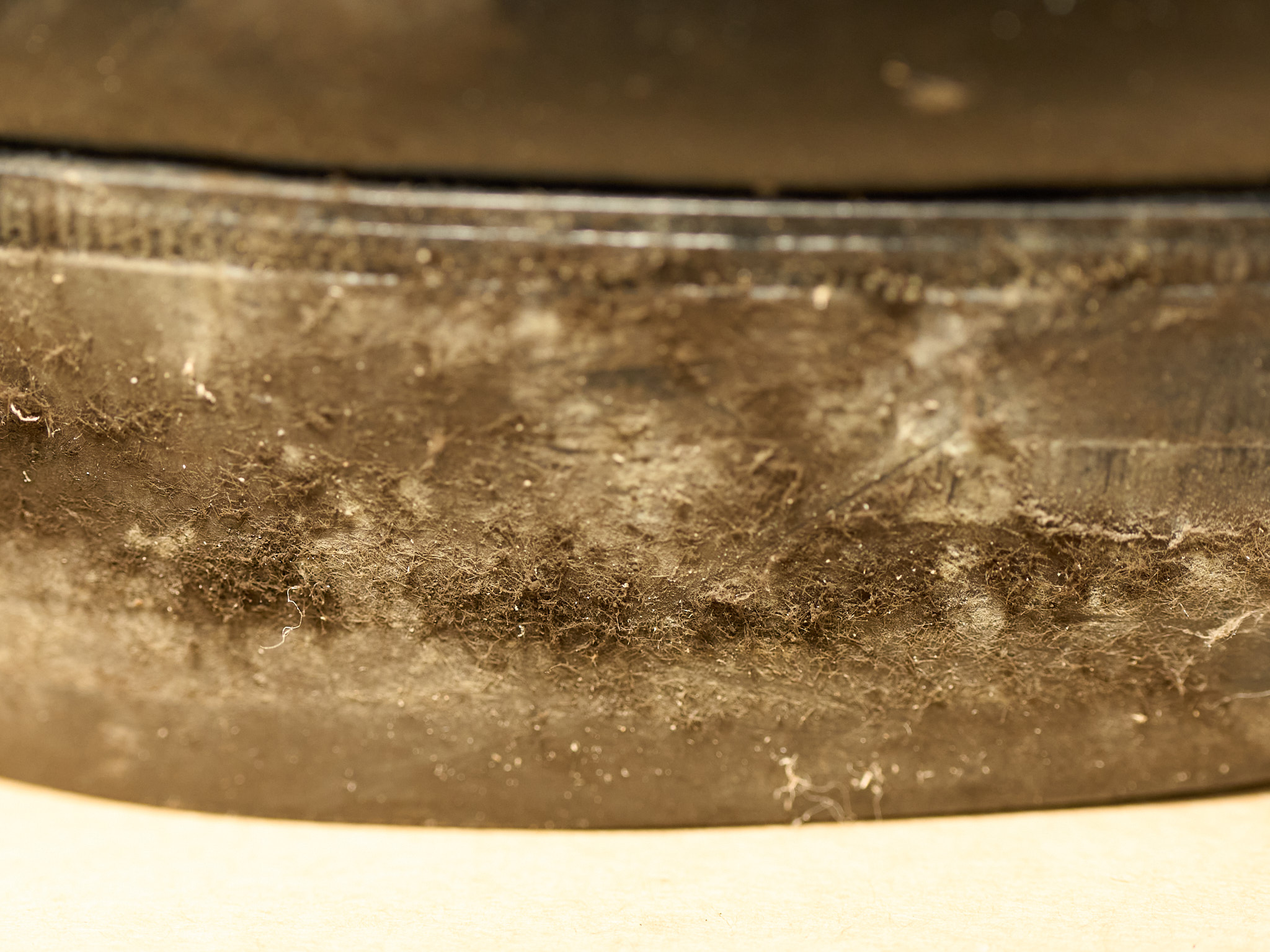
The roots have penetrated deep into the leather, breaking down the fibers and leaving a stain. Even a professional cleaner will struggle to remove this stain completely.
Still, with the right removal steps, you can kill the mold and stop the mold from spreading.
Preparing to Remove the Mold
When removing mold, the preparation matters as much as removing the mold.
Set Up the Workspace
First, set up the workspace. There are two rules.
- Work in a well-ventilated room, or outdoors.
- Wear a mask.
As you work, mold spores — the seeds — scatter into the air. If they land on other shoes or furniture, new mold will form.
Breathing in the spores also carries health risks. They can trigger allergic reactions like sneezing and coughing, and they can harm your lungs.
Follow these two rules — to protect your belongings and your health.
Tools You'll Need
Next, the tools for removing the mold.
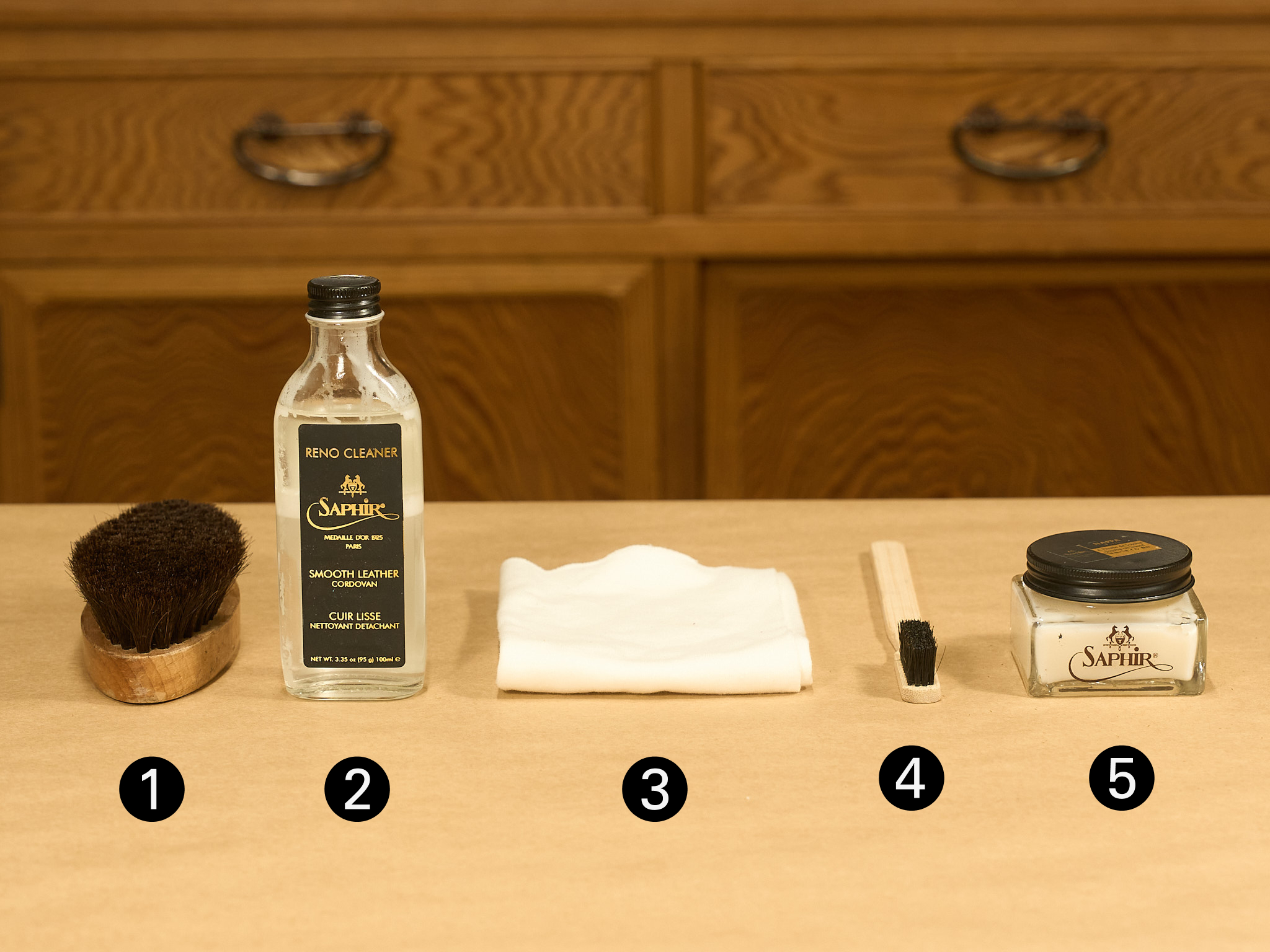
1. Horsehair Brush
Use it to brush the mold off the surface.
It is best to keep a brush just for mold removal. If you want to use the same brush for your daily shoe care, disinfect it well with alcohol after removing the mold.
2. Leather Shoe Cleaner
A cleaner made for leather shoes with disinfecting agents.
A regular shoe cleaner cannot kill the mold that has penetrated the leather. You need a strong cleaner that works on mold.
In this article, I'm using Saphir Reno Cleaner.
It is a strong cleaner. On delicate leather, it can cause the color to fade. Test it first on a spot that is not noticeable, such as the arch area or the tongue.
3. Cloth
Prepare flannel or strips of an old T-shirt to apply the cleaner. The mold will get on the cloth while removing the mold, so throw it away when you are done.
4. Handled Brush (If Mold Is in the Fine Areas)
In some cases, a handled brush helps.
When mold grows along the welt or where the leather overlaps, a cloth alone cannot reach it.
In that case, prepare a handled brush that can clean the fine areas.
5. Cream
After disinfecting, the leather will lose moisture and oils. Prepare a conditioning cream to feed them back into the leather.
The Steps to Remove Mold
Once the workspace and tools are ready, please begin.
The most important part of mold removal is not just brushing off the visible spores — the seeds. You must destroy the invisible hyphae — the roots.
The shoes may look clean. But if the roots remain in the fibers, the mold will return.
To truly clean your shoes and keep the mold from returning, take each of the following steps with care.
Step 1: Brush Off the Mold with the Horsehair Brush
First, use the horsehair brush to sweep off the mold you can see on the surface.
If mold grows around the welt or where the leather overlaps, work the brush especially in those areas.
Grip the brush firmly. Move it fast, with some force.
Step 2: Wipe Off the Mold with the Cloth
Soak the cloth with the cleaner and wipe off the mold.
Spores often sit beyond the spots where you see the mold. Wipe the whole shoe, including the tongue.
One pass will not cover it all. Reapply the cleaner and wipe in three or four passes.
Spores that cling to the cloth can get back onto the leather. Turn the cloth over as you go, so the clean side always touches the leather.
Scrubbing hard damages the surface of the leather. Wipe gently with light strokes.
Step 3: Remove the Mold with the Handled Brush (If Mold Is in the Fine Areas)
Mold can settle in the fine areas — around the welt, or where the leather overlaps — and a cloth cannot always reach those fine areas.
In that case, soak the handled brush with the cleaner and brush those areas.
The cleaner reaches into the fine areas, removing the mold and disinfecting at the same time.
Step 4: Dry the Shoes in the Shade
After wiping the shoes, let the shoes dry for one to two days in a shaded area with good airflow.
Direct sunlight hardens the leather and leads to cracks. Always dry them in the shade.
Step 5: Condition the Leather with Cream
Once the shoes are completely dry, condition the leather with the cream.
After removing the mold with a cleaner, the leather has lost its moisture and oils. It cracks easily, and the shine is gone.
Wrap the cloth around your finger, take a small amount of cream, and work it into the whole shoe in a few passes.
Finish with a dry buff to bring back the shine. The mold removal is done.
Why You Should Avoid Vinegar and Alcohol
Vinegar and alcohol are often suggested as household substitutes for mold removal.
But I always use a cleaner made for leather shoes.
Vinegar and alcohol do work on mold to some degree. The acetic acid in vinegar slows the growth of the fungus. Alcohol breaks down its cell membranes and kills it.
But in exchange for removing the mold, they can cause two kinds of issues.
1. Vinegar Can Alter the Leather and Leave a Lasting Smell
Vinegar is acidic. It can break the protein bonds that make up the leather.
The leather may harden, or the surface may turn rough — shortening the life of the leather itself.
The smell of vinegar can also soak into the fibers and remain in the leather.
2. Alcohol Can Cause Color Loss and Cracking
Alcohol very often causes the color to fade.
Alcohol dissolves leather dyes. The moment you apply it, the dye can bleed out and fade, which can be hard to repair.
And as alcohol evaporates, it takes the moisture and oils the leather needs along with it. The leather can shrink — and in the worst case, form cracks that cannot be undone.
To avoid this trouble, use a cleaner made for leather shoes — one designed specifically for leather.
How to Prevent Mold
Even after you remove the mold, it will grow back if the root cause remains.
Mold needs two things to grow: food and moisture. Eliminate these two, and you can prevent mold growth.
No special tools or skills are needed. Small daily habits keep mold away.
Here are two habits you can start today.
1. Brush Regularly
The dust on the leather is food for mold.
Every two to three months, take out your unworn shoes — not just the ones you wear often — and brush off the dust. This alone can cut the chance of mold growth significantly.
Make regular brushing a habit. It is the single most effective way to prevent mold.
2. Store the Shoes Properly
Mold often grows during long-term storage.
If you store shoes in a hot and humid place, by the time you take them out again, the mold may penetrate deep into the leather.
For long-term storage, do not just store the shoes in a closet. Set up an environment where mold does not grow.
I have explained the details in the article below.
How to Store Leather Shoes: Prevent Mold and Cracking
Mold on leather shoes can be repaired. Choose the right tools and follow the proper steps so the shoes can be worn again.
The most important thing is not just cleaning the surface, but keeping the leather itself in good condition. I hope this guide will be helpful in protecting your favorite pair from mold, so that you can keep wearing them for years to come.