Leather Shoe Care: A Shoemaker’s Guide to Smooth Leather and Suede
Keep wearing your leather shoes and keep caring for them, and they will develop a patina.
If you skip the care, they will deteriorate. Dirt builds up, the shine fades, and the leather breaks down.
In this article, I will walk you through leather shoe care in two parts — smooth leather and suede — and show you how to handle the trouble for both.
How to Care for Smooth Leather Shoes
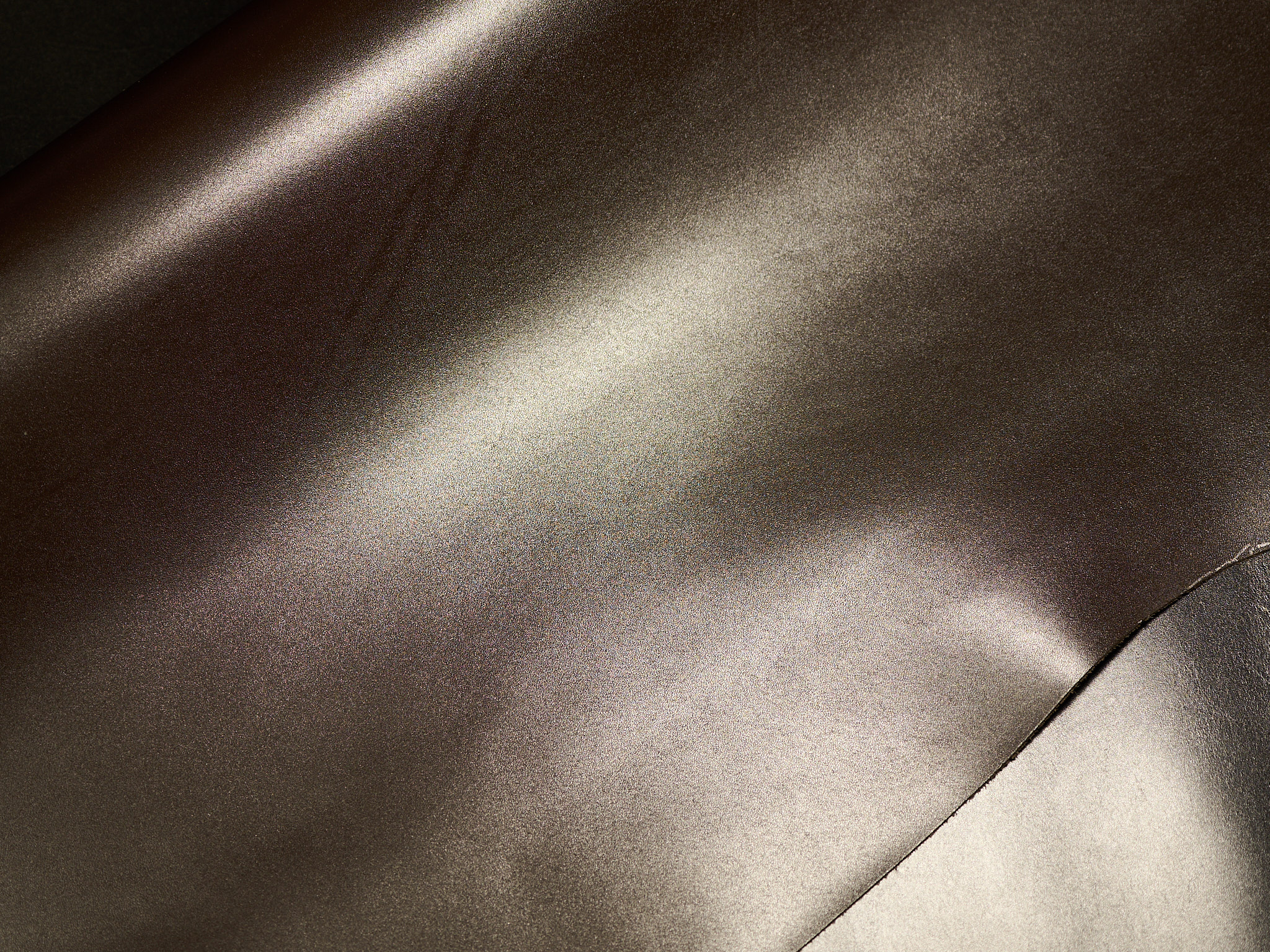
Smooth leather is leather finished with a smooth, flat surface.
It is the most common material for dress shoes and business shoes.
The texture varies with the tanning and the type of leather. But with the right care, any smooth leather will deepen its shine and color.
Now let me walk you through the steps, along with the tools you will need.
Step 1: Keep the Shape with Shoe Trees
Before you start, put shoe trees into the shoes.
A shoe tree is a care tool shaped like a foot. It goes inside the shoe and keeps the shoe from losing its shape.
Shoe trees stretch out the creases, so the cleaner and cream you use in the next steps can reach deep into them.
Keep the shoe trees in during storage as well, not just during care. They will hold the shape of the shoes.
I recommend wooden shoe trees. The wood absorbs moisture and odor.
Also, take out the laces so they don't get in the way.
Step 2: Brush Off the Dust with a Horsehair Brush
Once the shoe trees are in, sweep the dirt off the surface with a horsehair brush.
Horsehair is thin, long, and supple. It digs out fine dust and grit without scratching the surface of the leather.
Dirt gathers around the welt, along the stitching, and in the creases. Work the brush especially in these areas.
Get the dirt off right away, and the cleaner in the next step will work better.
Brushing drops the dirt on the spot, so do it at the entrance or outdoors.
Step 3: Wipe Off Fine Dirt with a Cleaner
Next, put a small amount of cleaner on a cloth and wipe the surface of the shoe.
The cleaner will remove the dirt and old cream that brushing can't.
Don't scrub too hard. Move the cloth as if stroking the surface, and the dirt comes off without damaging the leather.
You will not be able to cover it all in one pass. Put the cleaner on the cloth two or three times and wipe the whole surface evenly.
Some cleaners are too strong and will strip the dye out of the leather. For regular care, a standard one is enough.
In this article, I'm using Saphir conditioning cleaner.
Step 4: Feed the Leather with Shoe Cream
Next, apply shoe cream to the leather.
As you wear leather shoes, the moisture and oil inside the leather slowly escape. If you leave it, the leather will stiffen. Cracks will form from the creases.
Shoe cream moisturizes the leather. It keeps the leather supple and prevents cracking.
I recommend applying the cream with your fingers. You can control the amount and work it into the fine spots.
Take the cream in two or three passes and thinly spread it over the whole shoe. Cream has a hard time getting into the creases, so work it in along the direction of the lines.
Shoe creams come in two types: one that conditions the leather, and one made for shine. The base of shoe care is keeping the leather conditioned, so start with a conditioning cream.
In this article, I'm using Saphir Noir Renovateur cream.
Step 5: Buff with a Cloth to Bring Out the Shine
Finally, buff the whole shoe with a dry cloth.
An old cotton T-shirt cut into a cloth will do. Wrap it around your fingers and buff gently and quickly.
Not all of the cream sinks into the leather. What doesn't sink in stays on the surface.
Wipe off the excess cream, and it will shine.
If the shine looks uneven, or one shoe shines more than the other, repeat this step until it evens out.
Lace the shoes back up, and you're done.
Troubleshooting for Smooth Leather Shoes
Even if you keep up with leather shoe maintenance, as in the above, there are still issues that may occur.
Here are the most common problems with smooth leather, and how to handle each one.
When You Have Stains
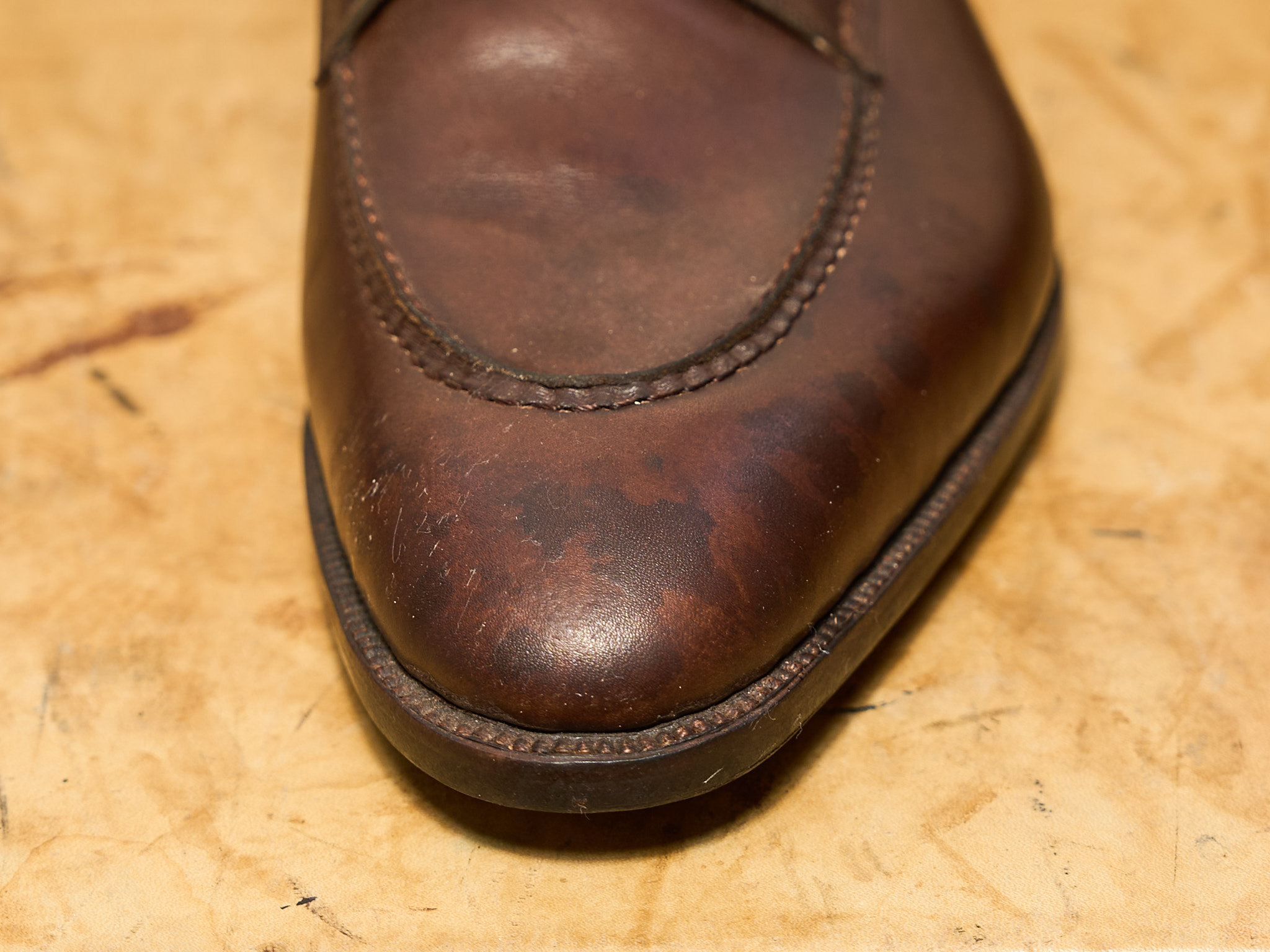
Sudden rain or a spilled drink can leave stains on the surface of the leather.
To remove the stains, wash the whole shoe with a soap made for leather.
But a full wash takes many tools, time, and work. The better way is to prevent the stains before they form.
I will explain how to remove and prevent stains in the article below.
How to Remove and Prevent Water Stains on Leather Shoes
When the Leather Is Scratched
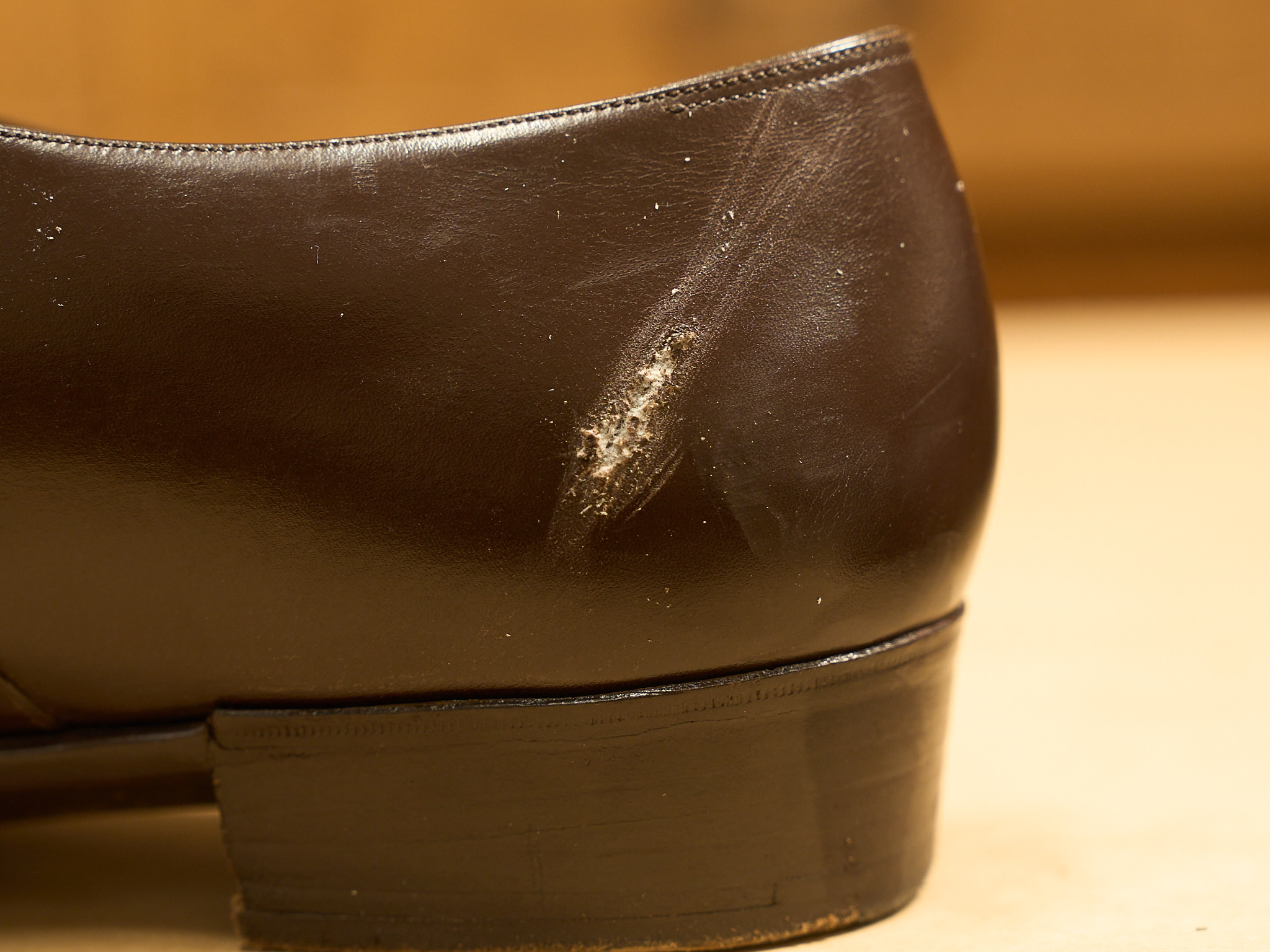
If you wear your shoes for a long time, they will eventually scrape against something and get scratched.
Not all scratches are the same. The fix depends on the depth. Some scratches can be removed with shoe cream. Some scratches can be concealed with wax.
For the full steps by damage depth, see the article below.
How to Fix Scuffed Leather Shoes: A Shoemaker's Guide by Damage Depth
When Mold Has Formed
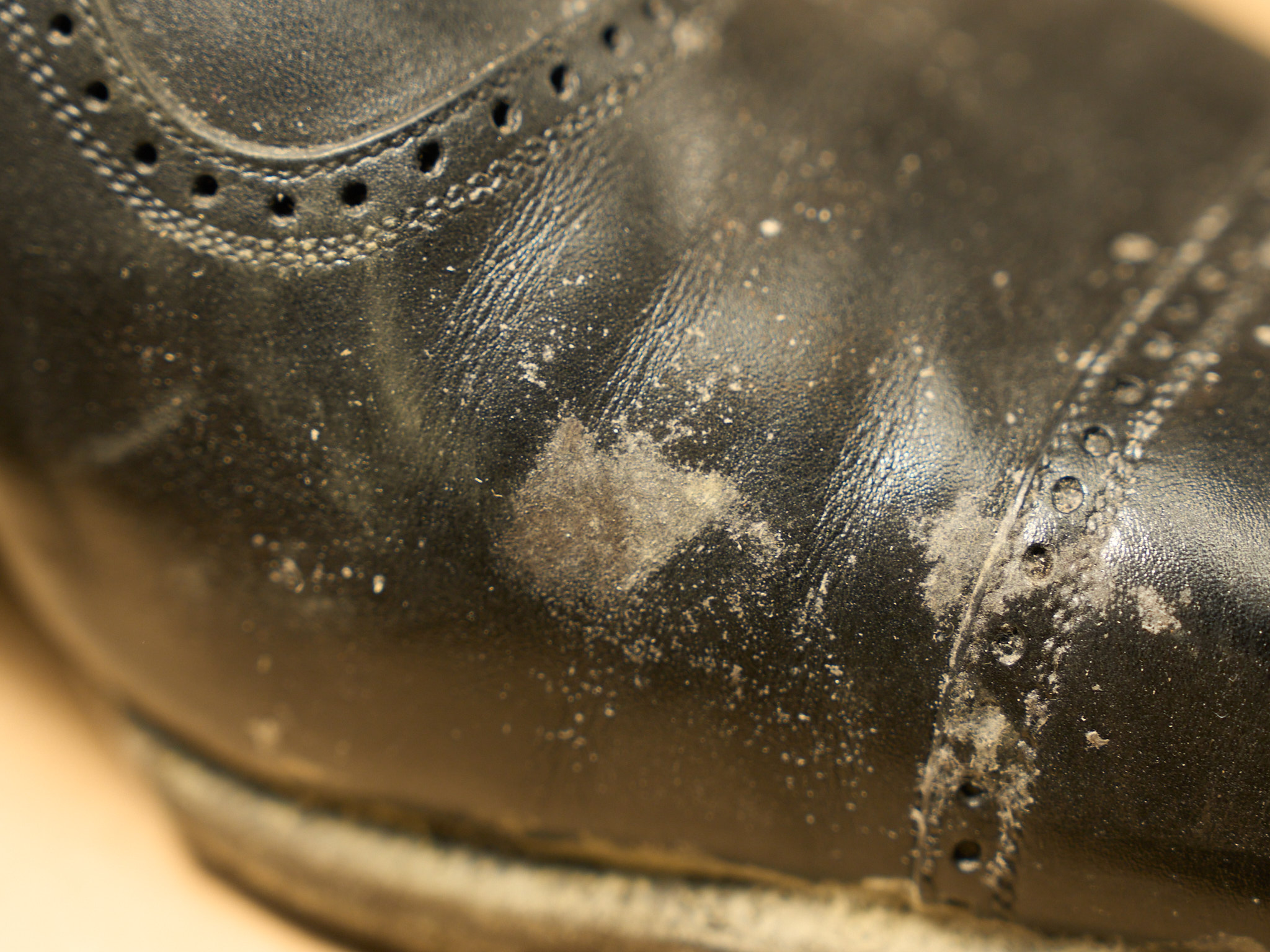
Mold can grow when you store shoes in a humid place, or if there is dirt still on them.
Wiping with a cloth won't reach the roots of the mold. It will most likely grow back.
You need a strong cleaner that works on mold, and you need to remove it down to the roots.
In the article below, I will explain how to remove mold and how to store shoes and prevent mold.
How to Remove and Prevent Mold on Leather Shoes: The Right Steps That Won't Damage the Leather
Frequently Asked Questions About Smooth Leather Care
Here are the questions I often hear about caring for smooth leather shoes.
Q. How often should I care for my shoes?
A. About once a month is a good guide.
The care in this article works best when the dirt starts to build up — about once a month.
I also recommend a quick brush with the horsehair brush after each wear.
Look closely at shoes worn for a full day, and you will find sand and dust. Brush after every wear, and the shoes will stay clean longer.
It takes a minute or two to clean. So, I keep a brush at my entranceway and brush my shoes when I take them off.
Q. Can creases be removed?
A. Creases form whenever you wear leather shoes. You cannot remove them completely.
Shoe trees keep the creases from getting deeper. But they cannot erase the creases already there.
Creases are not damage. They are a normal part of aging.
That said, don't ignore them. Regular care keeps the leather supple and prevents trouble like cracking.
Q. Do I need to care for my shoes before long-term storage?
A. Yes. Store them with dirt still on, and your shoes will be prone to mold and cracking.
Before long-term storage, remove the dirt with a cleaner, then feed the leather with cream.
For the full steps, see the article below.
How to Store Leather Shoes: Prevent Mold and Cracking
How to Care for Suede Shoes
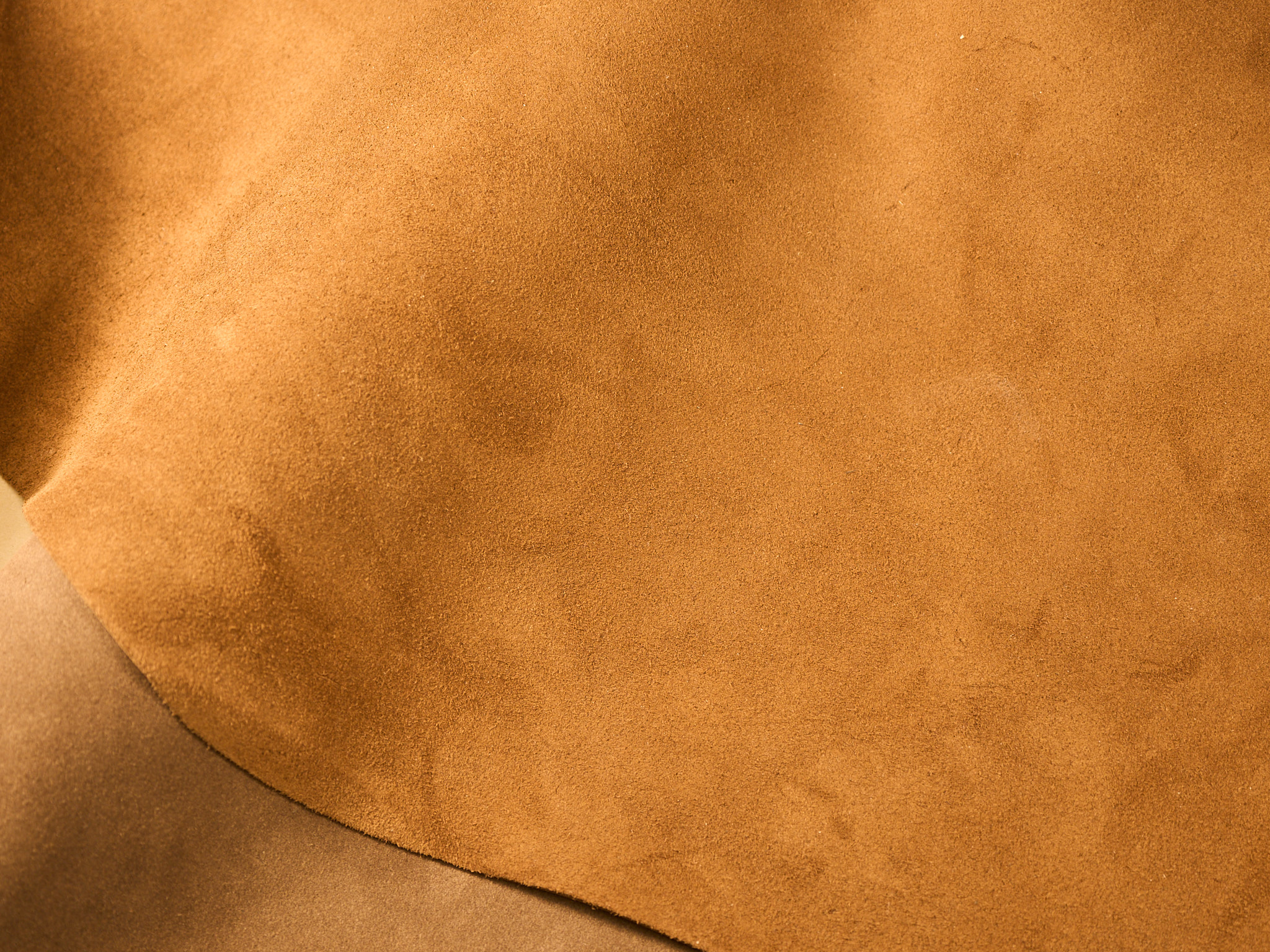
Suede is leather with a raised nap on the surface.
Like smooth leather, it is a common material for dress shoes and business shoes. Its charm is its warm expression.
The raised nap catches dirt easily, and it is sensitive to water and oil. Regular care matters here: smooth the nap, and remove the dirt before it builds up.
Step 1: Keep the Shape with Shoe Trees
As with smooth leather, put shoe trees into the shoes before you start.
Suede care is mostly about firm brushing. Shoe trees hold the shape steady, so the force of the brush carries through to the nap.
Here as well, I recommend the wooden type that absorbs moisture and odor.
If the shoes have laces, take them out.
Step 2: Remove the Dirt with a Pig Bristle Brush
Once the shoe trees are inside, sweep the dirt off the surface with a pig bristle brush.
A pig bristle brush is made of pig hair, as the name says. The bristles have a firmness to them.
That firmness digs out the dust and grit caught deep in the nap.
Hold the brush firmly and brush with force. That is the trick.
Dirt gathers where the leather overlaps and around the welt. Brush these areas well.
Step 3: Raise the Nap with a Crepe Brush
Next, brush the whole shoe with a crepe brush.
A crepe brush is a tool made for suede care. The bristles are natural rubber.
The rubber grips and lifts the nap. It pulls the dirt out from between the fibers and raises the flattened nap.
Brush firmly against the nap from many angles.
Brush again and again until the fibers stand up where the nap is compressed.
Step 4: Singe Off the Frizz with a Lighter
As you wear suede, the nap grows uneven in length. Frizz starts to show.
A brush alone cannot remove this frizz. Pass the flame of a lighter over the surface and singe it off.
Hold the flame on one spot, and the leather will scorch. Keep the flame moving quickly — that is the most important part of this step.
The lighter will be hot after use. Be careful not to burn yourself.
Step 5: Smooth the Nap with the Pig Bristle Brush
Finally, take the pig bristle brush again. Sweep away the singed frizz and smooth the nap.
Brush in one direction — from toe to heel, or from heel to toe — so the nap lines up.
When the nap lines up, the true texture and color of the suede show evenly.
And you're done.
Troubleshooting for Suede Shoes
Here are the most common problems with suede, with links to the articles that cover each fix.
When You Have Stains
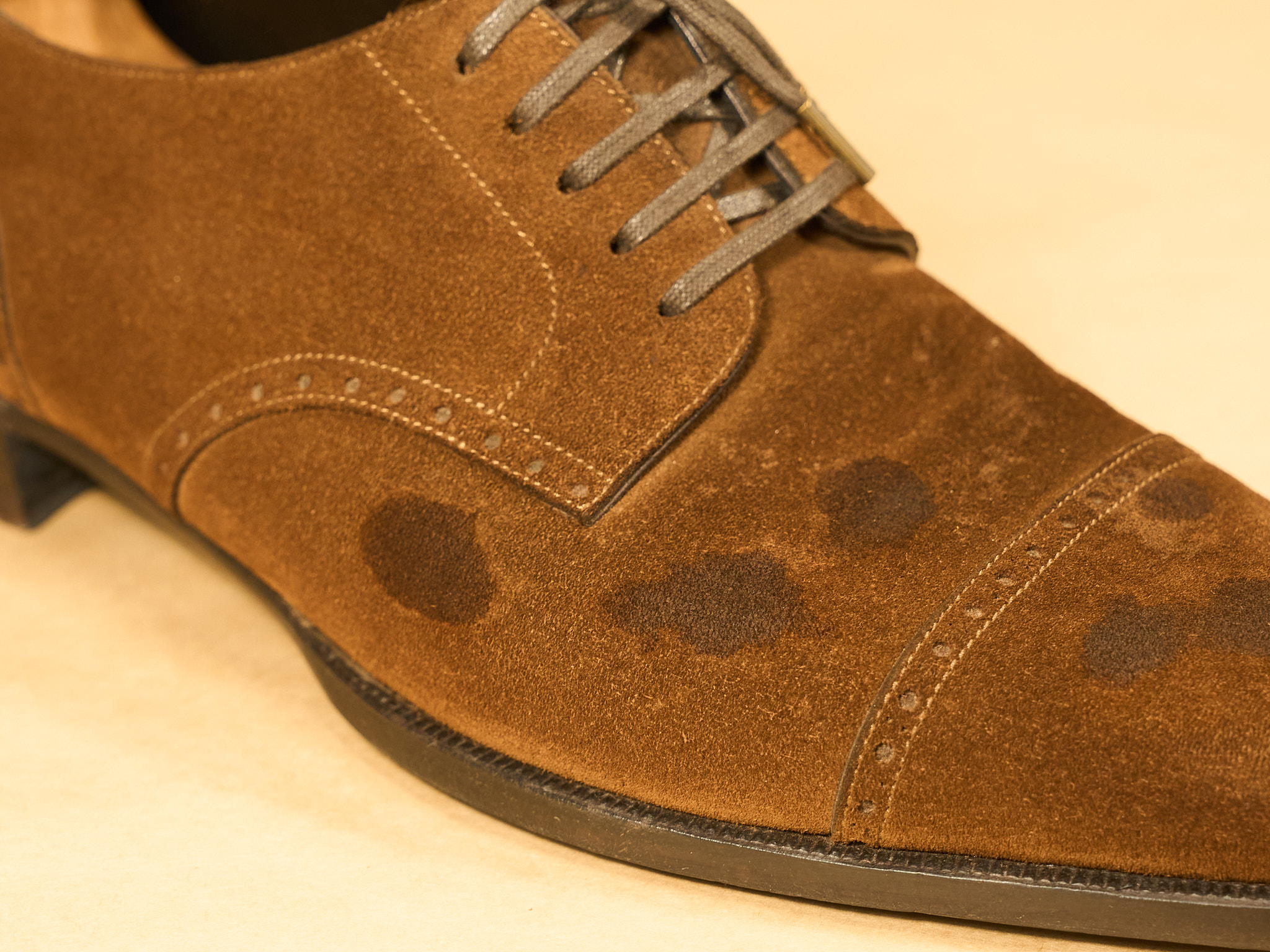
Water and oil sink into suede fibers more easily than into smooth leather. Stains form easily.
Water stains and oil stains form in different ways, and each needs its own fix.
I explained both in detail in the article below.
How to Remove Stains from Suede Shoes: Water Stains and Oil Stains, Step by Step
When Scuffs and Dirt Stand Out
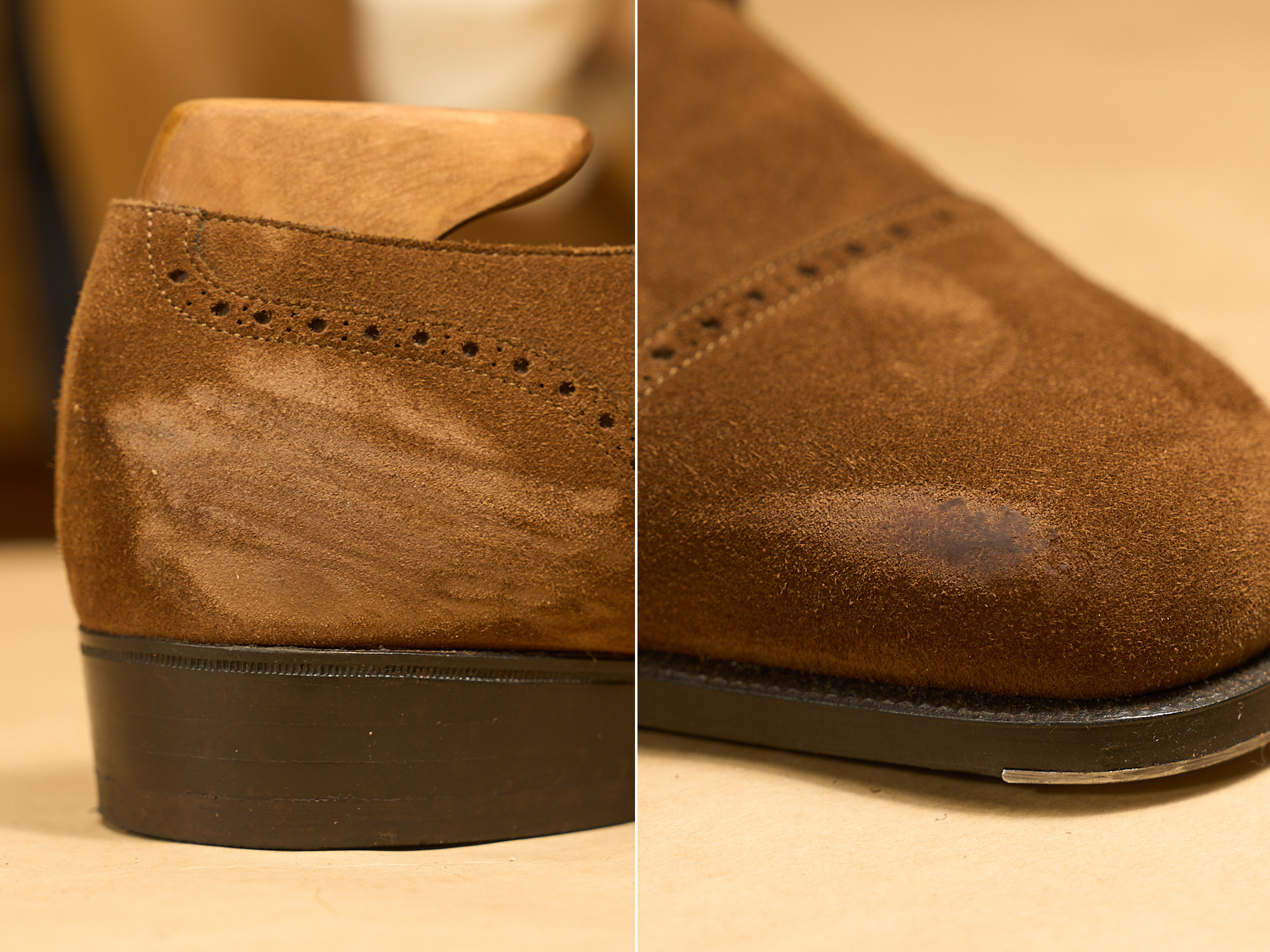
Light scuffs and dirt can be cleaned with the crepe brush care, as described above.
But when the scuff runs deep, or the dirt has crusted on, a crepe brush may not be enough.
Even so, a brass brush can bring the suede back.
There are several types of brushes for suede care, and each has its own strengths.
I have covered the types of brushes and how to use them in the article below.
How to Use a Suede Brush: A Shoemaker's Guide to 5 Tools
Frequently Asked Questions About Suede Care
Here are the questions I often hear about caring for suede shoes.
Q. How often should I care for suede shoes?
A. About once a month is a good practice.
As with smooth leather, caring for shoes about once a month is good.
Brushing after each wear does even more for suede than it does for smooth leather.
Suede picks up dirt easily, and the color dulls easily. A quick pass with the pig bristle brush after each wear keeps the shoes cleaner longer.
Q. What should I do about fading and color loss?
A. Recolor the suede with a suede spray.
Suede sprays come in neutral (colorless) and colored types. Try a neutral spray first.
A neutral spray has no dye, so it does not add color. But the oil in the spray slows the fading caused by drying out, and it revives the original color.
If the color still looks faded after a neutral spray, fill it in with a colored spray.
I explained the steps for using sprays in the article below.
How to Protect Suede Shoes: A Shoemaker's Guide to Waterproofing
Q. Can suede shoes be washed with water?
A. Yes. But you need to work carefully.
Washing is possible. But it takes time and work, and there is some risk of the shoes losing their shape or texture.
A wash makes sense for one thing: removing water stains from suede. For any other dirt, try the other methods first.
How to Clean Suede Shoes: A Shoemaker's Guide to the Right Tools and Steps
What You Should Never Use for Leather Shoe Care
Last, here are the things you should keep away from smooth leather and suede.
Household Detergents
First, do not use dish soap or household cleaners on leather shoes.
Their main ingredient is a surfactant that breaks down oil and grease. It strips the oil the leather needs along with the dirt. Even a neutral detergent can leave the leather dry and stiff.
When you clean off dirt, use a cleaner made for leather. That is the rule.
Vinegar
You will see claims online that vinegar is good for leather care. They are wrong.
Vinegar has a pH of around 2. Leather sits at about 4.5 to 5. The acidity level between vinegar and leather has a large gap.
One use may not make a difference on the surface. But if you use it again and again, the leather fibers slowly break down.
The dirt may look gone for a moment, but you are shortening the life of the leather. Stay away from vinegar.
Mink Oil
Mink oil is sometimes used to care for leather goods.
For work boots and country boots — shoes that need water resistance and flex — mink oil is fine.
But I do not recommend it for dress shoes.
Mink oil is heavy in oil and sinks deep into the leather fibers. The leather turns softer than it should be.
A dress shoe holds its form through firmness and tension. If you put on too much oil, the tension will be lost. The shoe loses its shape.
Keep applying mink oil, and the surface darkens. The original color becomes hard to bring back, and the shine fades away.
It is an easy product to use — and it sounds good for leather. But for dress shoe care, use a cream made for leather shoes.
Smooth leather and suede are built differently. So the tools and the steps differ.
What they share is this: with regular maintenance, leather shoes get better the more you wear them.
Start small. Brushing after each wear is enough. Make it a habit.
Build it up, and your leather shoes will age in the right direction.